


Today you will learn what proper position size looks like.
You will stop guessing how many shares to buy.
Most importantly, you will know how to protect your account so one bad trade does not hurt you badly.
I have used this method through winning streaks and losing streaks.
It is the one thing that has kept my account alive and growing.
First, I will show you the biggest mistakes traders make with position size.
Next, I will break down the simple formula I use on every trade.
Then I will walk you through real examples so you can see it in action.
Finally, I will give you a free indicator that you can use before every trade.
What is Position Sizing?
Position sizing is the process of determining how much capital you will allocate to a trade.
The size can be how many shares, contracts, or coins (in the case of crypto) you buy.
Many traders are obsessed with finding the perfect entry or perfect target point, but there is something far more important: proper position sizing.
Position sizing is, first and foremost, the primary and fundamental way to manage risk.
The biggest mistake traders make
There’s a saying, “Price will hurt you, but size will kill you.”
New traders tend to oversize a trade, hoping to “hit big.”
They want to get rich quick.
They have the mentality: “I just need one 100x, bro, and I’m done.”
When in reality, money is made over time with a steady equity curve.
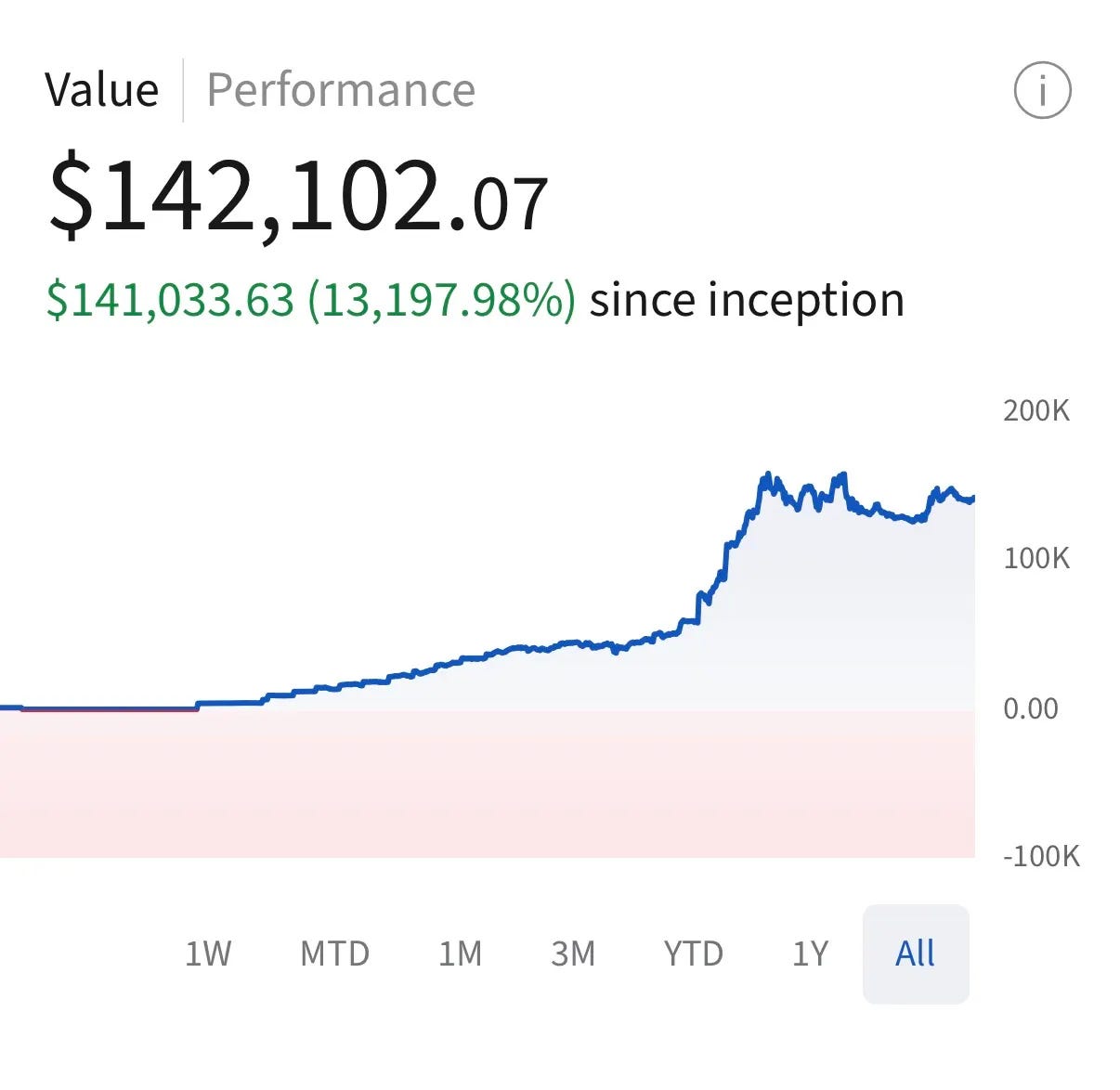
If you use all your capital on a single trade, you expose yourself to a risk called the “overnight gap.”
An overnight gap occurs when a stock or financial asset opens a new trading session at a significantly different price than the previous day’s close.
This creates an empty, “dead air” space on the price chart because no shares were traded at the intermediate prices while the market was closed.
If you put 100% of your capital into one position and it gaps down 10% overnight, you’ve just lost 10% of your capital…in a single session.
That is not sustainable, and believe me, it happens more often than you’d like.
Oversizing leads to the most serious problems in trading: poor risk management, large drawdowns, and, eventually, blown accounts.
Oversizing drains mental capital
Big size creates constant stress and fear.
This leads to decision fatigue and burnout.
Oversizing breaks your discipline
When size is too large, you stop following your plan.
This leads to moving stops, early exits, and rule breaking.
Oversizing distorts your risk perception
Normal moves feel like emergencies when the position is huge.
This leads to overreacting to every tick and micromanaging trades
Oversizing kills strategy quality
Results reflect position size, not edge or method.
This leads to messy data, bad reviews, and constant system changes
Oversizing threatens long term survival
Large trades accelerate drawdowns and blow ups.
This leads to rapid capital erosion and sometimes margin calls or liquidation
So what is the fix for oversizing??
How to Properly Size Your Trade
Before I share the formula I use, I want you to understand a simple concept.
Your position size MUST be determined by the risk you are taking.
So we always calculate size based on the percentage we are willing to risk.
The risk percentage you use should come from your risk‑of‑ruin calculation plus the Kelly-criterion optimal betting size (I’ll discuss this in detail in a future post).
The higher the percentage risk you choose, the greater the probability of blowing up your account , effectively draining all the cash from it.
That’s what beginners, myself included, didn’t understand at the start.
If you don’t know your risk of ruin, a good general rule is to risk 0.5% of your capital on each trade.
There are two components we need to consider when determining our position size:
The percentage we want to risk.
The stop-loss (The level at which our initial thesis becomes invalid.)
These two components will determine our position.
Since we already know number one, I’d like to explain a bit what I mean by number two.
Your strategy will define the stop-loss.
Let me give you a few examples.
If you use support and resistance, your level will most likely be just below the resistance line.
If we take this example on AAPL on the daily time frame:
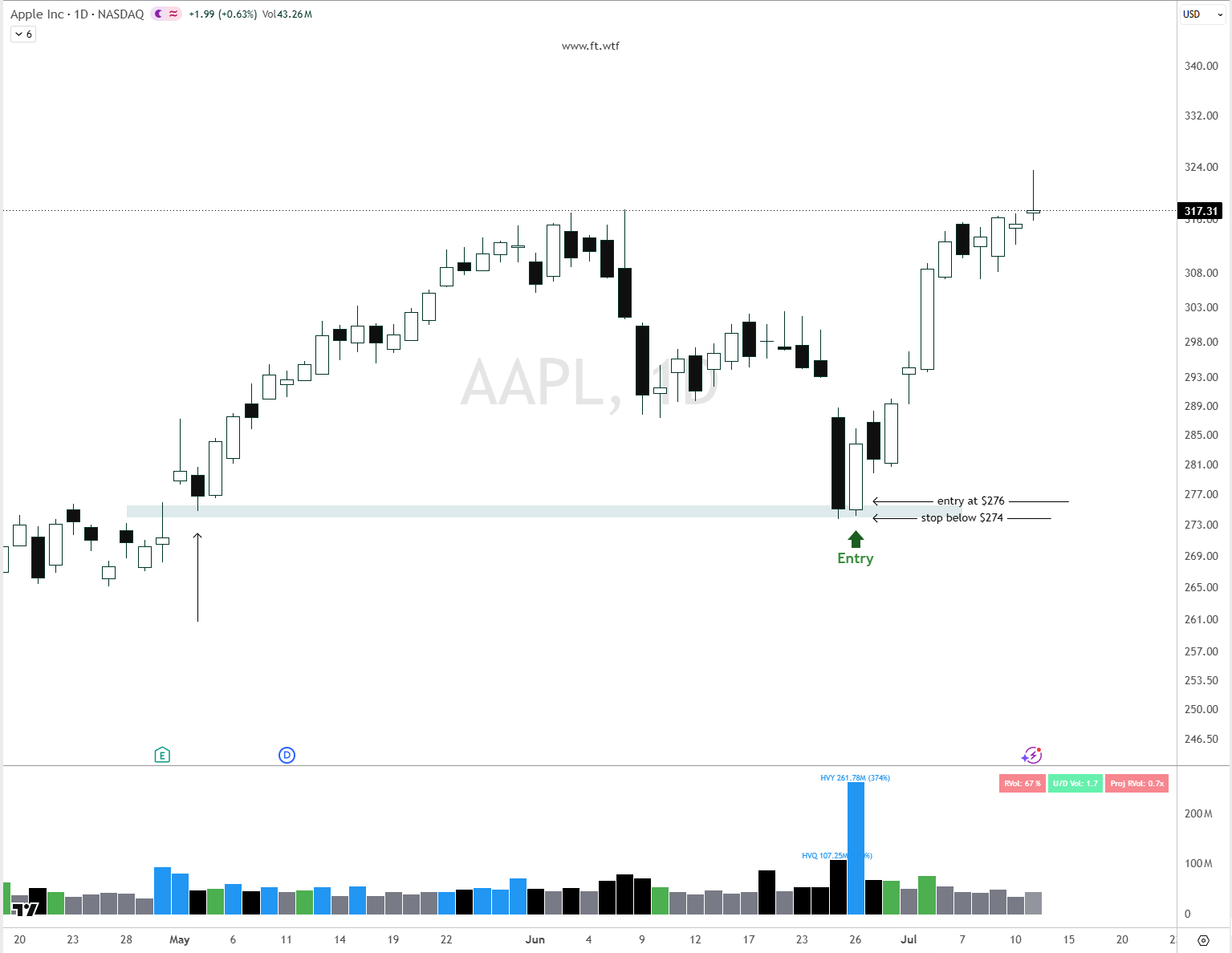
You notice that price has reached a key level and has just printed a reversal with volume.
Your entry is at 276, and you place your stop loss right below the resistance, at 274.
Now that we have a stop loss and know how much we’re risking, let’s calculate.
With a 10,000‑dollar account and 0.5 percent risk per trade, you can risk 50 dollars on this AAPL setup.
The distance between entry at 276 and stop at 274 is 2 dollars per share.
If you divide 50 by 2, you get 25 shares, that is your correct position size for this trade.
Whether you use support and resistance, moving averages, or highs and lows, you need a level to anchor your stop loss.
Now that we have the components, I’ll show you what I personally use.
How I Implement Position Sizing
As I was saying, we need these two components to determine our position size.
We start with the first one: what percentage of our capital we’re risking.
I’ve built a little framework to explain this better:
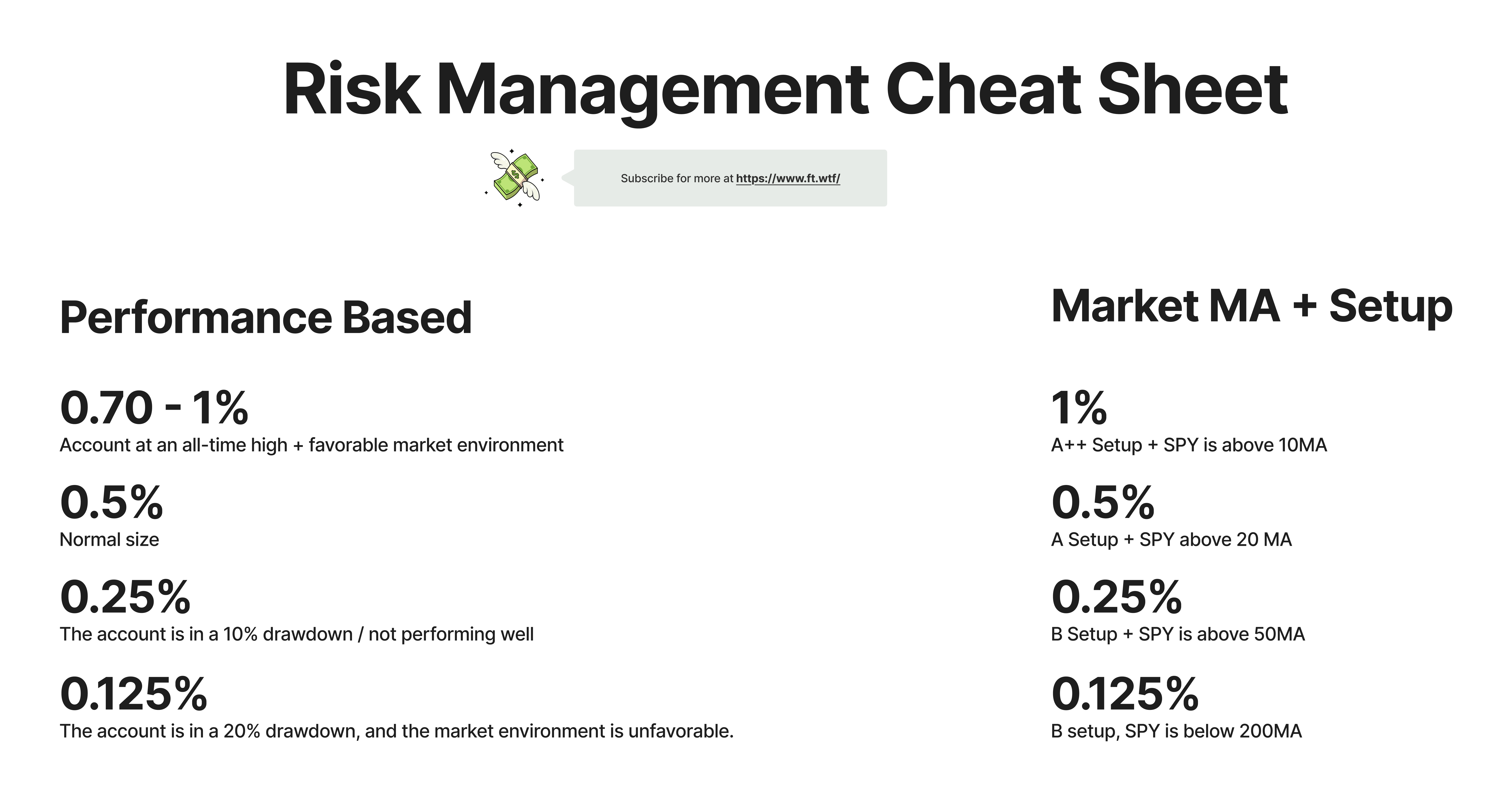
As you can see, my risk percentage per trade is dynamic.
It changes based on my performance and my market awareness.
However, if you’re just starting out, I recommend keeping it fixed, because you want as many simple components as possible in your trading.
You’ll run into plenty of problems that you need to solve first, so there’s no point in making things more complicated at the beginning.
Dynamic position sizing will give you those outsized gains once you have the necessary experience.
Now let’s move on to point 2:
Where do I place my stop loss?
My stop loss is either at the low of the day if I’m in a long position, or at the high of the day if I’m in a short position.
On a chart it looks like this:
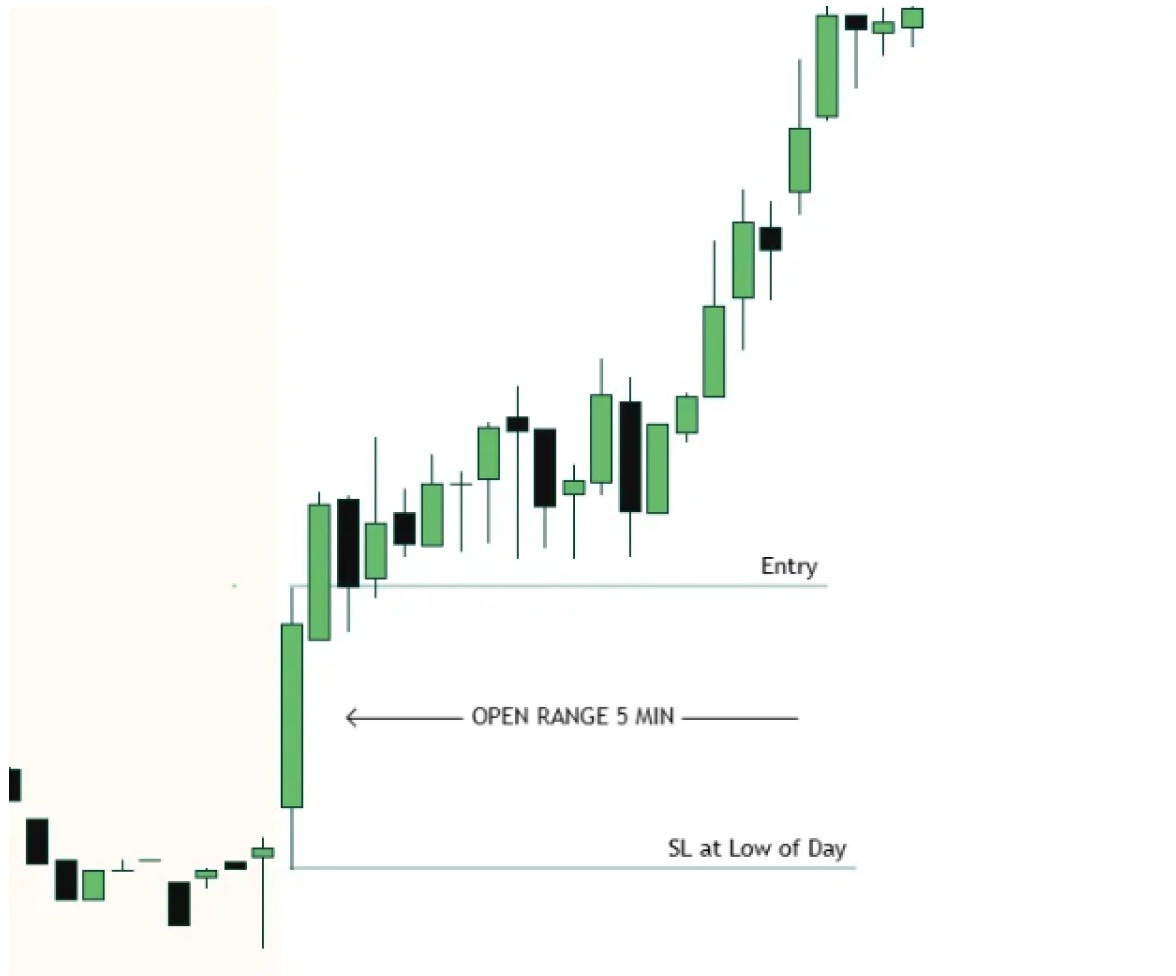
Using the 5‑minute opening range breakout tactic allows me to get extremely tight entries.
That way I can size up (even if you have a relatively small trading account) while still risking a very small percentage of the account.
This is how I managed to make 7,140 dollars while risking only 247 dollars.
I wrote about this in more detail here.

This is the secret: you want tight entries so you can size up while risking very little.
Naturally, if you use a wider stop, you WILL HAVE TO reduce your size.
There is a direct relationship between your stop‑loss level and your position size.
Here’s another real example:
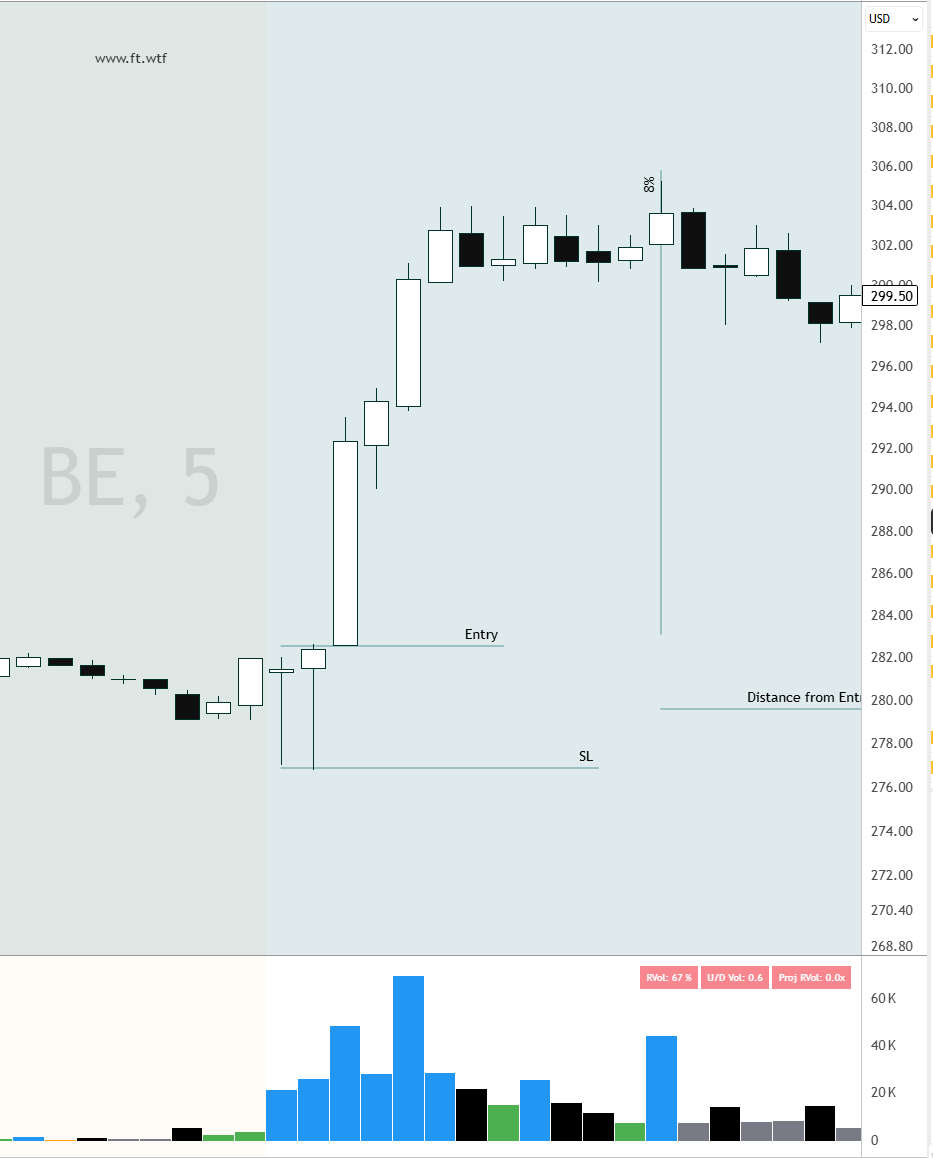
Distance between entry and stop is 5.71 dollars, which is about 2.02 percent, and a 4R target would be at 305.52 dollars.
This means you could already have taken profits within 30 minutes, because you would have made four times what you initially risked.
See the power of tight stops and how the math works in your favor?
You’re already looking at a 4x risk‑to‑reward.
And in swing trading, you can reach 40–50R, or even monster trades like 80R
The indicator that automatically calculates your position size
In my attempt to bring as much value as possible to this community, I’ve created an indicator that does all of this automatically.
It calculates your position size based on the low of day and high of day, and on the percentage of capital you want to risk.
And the best part?
It’s completely free.
On the chart, it looks something like this.
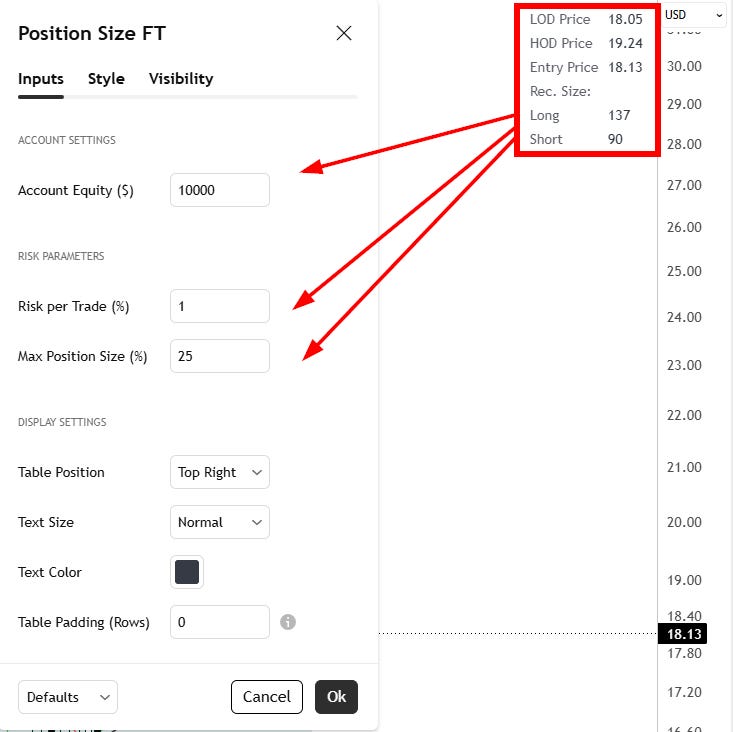
The indicator asks for the following inputs:
Your account size
How much you want to risk per trade
Your max position size
Then it displays in real time on the chart the low of day price, the high of day price, and the recommended size for both long and short.
All of this is done automatically, in real time.
You can apply it to your chart for free here:
https://www.tradingview.com/script/NbqQxXEL-Position-Size-FT/
It saves you a ton of time and simplifies your trading while keeping your position size consistent, an absolutely essential trait for a beginner trader.
While the free indicator will save you a lot of time and help you keep your position sizing consistent, applying everything correctly in real market conditions is a completely different story.
Many traders still struggle with knowing exactly when to size up, how to adjust risk based on market environment, where to place their stops in live trading, and how to manage the trade once they’re in it.
That’s exactly why I built Freedom Trades PRO.
Inside the community you’ll get:
Live trade ideas with proper position
Real-time trade management and adjustments as the market moves
Structured exits and clear rules so you don’t have to guess
Curated watchlists and daily context so you know what to focus on
Instead of applying position sizing alone, you’ll see exactly how it’s used in real trades, with full context.
If you are thinking about joining the community, right now is the best time to do it.
The yearly plan is 49% off.
Click the button, join Freedom Trades PRO with the yearly plan, and come trade with us, in real time.
See you inside :)
Trade Setups of The Week
High Probability Trades for 13 - 17 June 2026

This week’s PRO report breaks down my full momentum stock watchlist, including the setups I’m watching.
You’ll see my portfolio, my open positions, and the exact stocks I’m targeting.. all based on the same swing trading system.
If you want to trade smarter ,not longer , and get my weekly watchlist with setups, and portfolio breakdowns, this one’s for you.
If you think this newsletter could help your friends, share it with them so it can reach as many traders as possible.
And here’s the fun part: when you share it, you can unlock special rewards + you will look smart in front of your friends :)
“One trade closer to freedom.”
Vladislav
Great sizing framework. I do the same thing and adjust according to my state of flow as well as the market’s.