


If you’re new to trading, you’ve probably already made a few mistakes that cost you money.
Some you’re aware of. Others you don’t even realize you’re making.
This article will save you years of unnecessary losses and thousands of dollars thrown away on mistakes I already made before you.
Why should you listen to me?
Because I’ve been through all of these.
I started with a small account, made every mistake in the book, and survived them all.
I didn’t read about them in a book. I lived them, paid for them, and pushed through them.
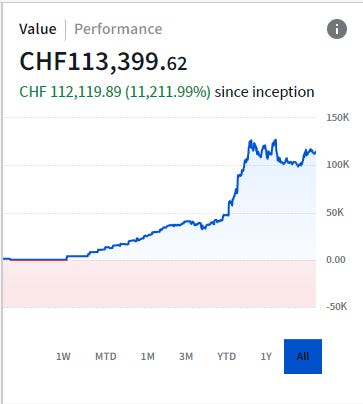
Today I trade profitably as a swing trader. Not since yesterday. For years.
Here’s what we’ll cover:
Year 1: the classic beginner mistakes
Year 2: When “I know enough” becomes dangerous
Year 3: The mistakes that kill consistent profits
I’ll walk you through the exact mistakes traders make in each stage, so you can spot them before they cost you money.
Let’s get into it.
Year 1: You’re the King of Ignorance
Everyone starts here.
You don’t know what you don’t know.
And that’s exactly what makes you dangerous.
Methodology Mistakes
You follow other people’s tips.
Someone tells you a stock looks good.
You buy it.
Sometimes it works, most of the time it doesn’t.
You’re just gambling.
You react to the evening news.
You hear earnings came in strong.
Next day you go long.
You get stopped out at a loss.
Why? Because the market already priced in that news.
By the time it reaches you, it’s old.
You ask everyone for their opinion.
Your broker, your friend, your family. If they’re not trading full-time, their opinion isn’t worth more than yours.
Nobody knows better than you what’s in your portfolio and why.
You average down.
You buy at $6.60. The stock drops to $6.00.
You tell yourself it’s an opportunity and buy more.
Now you’re twice as exposed.
If the stock keeps falling, your loss doubles.
You don’t use a stop loss.
It doesn’t cross your mind that you can lose until it’s too late.
You have no trading plan.
Every mistake above comes from the same place: no plan.
Without a plan, you’re just a gambler.
Risk Management Mistakes
In Year 1, your only concern is having enough money to enter a trade.
The concept of risk management doesn’t exist for you.
You don’t know what risk of ruin means.
You don’t know how much you can lose on a single trade.
This is the most dangerous blind spot of the entire first year.
Psychology Mistakes
You trade for the adrenaline.
Trading gives you a feeling that normal life doesn’t.
Even when you’re losing, you want to place another trade.
That “next trade” always seems exciting.
That addiction costs you money.
You trade out of revenge.
You lost. You’re angry. You want your money back immediately.
You enter again, no plan, driven by emotion.
The market doesn’t know you and doesn’t care.
You’re the only one who loses twice: in your account and in your ego.
Year 2: You Know a Little, But You’re More Dangerous Than Ever
You survived Year 1.
Good. Now you think you know something.
And that’s exactly why you’re a danger to yourself.
Methodology Mistakes
You believe everything you consume.
If it’s written somewhere, it must be true.
Wrong.
The only thing that makes a trading idea valid is your own testing.
Nobody else can do that for you.
You think technical or fundamental analysis is enough.
You discover indicators, patterns, signals.
You think that’s all you need.
But technical analysis without risk management and psychology is like a car without a steering wheel.
You keep adding more indicators.
If one indicator didn’t predict the move, you look for one that would have.
You fill your chart with lines and colors.
That’s called curve fitting and it’s a trap.
More indicators don’t mean more clarity.
You paper trade and think it’s working.
The problem is simple: there’s no emotional pressure.
You can erase a losing trade and say you “missed something.”
I’ve never met anyone who lost money paper trading.
Everyone loses with real money.
The only real school is the market.
You fall into the prediction trap.
You want to know where the market is going.
You look for systems that promise you that.
Elliott Wave, Gann, cycles.
They all sound good in theory.
The reality is the market doesn’t follow a predetermined pattern.
By the time you figure that out, you’ve lost time and money.
You try to pick tops and bottoms.
The market hits a new high.
You want to sell. Seems logical.
It’s not.
Traders who sell extreme strength and buy extreme weakness without confirmation lose consistently.
You move your stop loss.
You have a stop.
The market gets close to it. You move it further to avoid getting taken out.
The fear of being wrong costs you more than if you had accepted the loss upfront.
Moving your stop loss is the signature of a weak trader.
You exit trades too early.
On one hand you don’t respect your stops.
On the other hand you take profits too fast.
You’re a bad player on both sides.
The secret is the opposite of what you do instinctively: cut losses fast and let winners run.
You blindly follow other traders.
You’re tired of losing alone, so you copy someone else.
The problem is you don’t understand why they enter or exit.
When things go wrong, you have no idea what to do.
That’s why at Freedom Trades PRO we do it differently. You get the full methodology so you always know what you’re doing right and what you’re not.
You keep switching: methodology, guru, market, timeframe.
When something doesn’t work, you change something.
The methodology, the broker, the market.
You don’t realize the problem isn’t out there. It’s you.
The real issue is always risk management.
Risk Management Mistakes
You now know something called risk management exists.
But you’re still risking too much per trade.
You’re overtrading relative to your account size.
You know the theory. You don’t apply it.
Psychology Mistakes
You’re addicted to the market.
The adrenaline becomes a habit.
You look for trades that don’t exist just to have something to do.
You’re impatient.
You don’t wait for your setups.
You enter any move. You keep losing.
You have unrealistic expectations.
You’ve seen ads promising “500% returns per year.”
You think that’s normal. That pressure pushes you toward bad decisions.
You blame everything else.
SPY dropped, that’s why you lost.
You miscounted the waves.
The cycle inverted.
There’s always an external reason. It’s never you.
Year 3: You Survived, But Your Ego Is a Time Bomb
If you made it to Year 3, respect. You’re battle-tested.
But you’re still dangerous.
You think the market owes you money.
Your ego has taken too many hits. That’s a toxic combination.
Methodology Mistakes
You can’t let go of what you’ve learned.
Determination is both your strength and your weakness.
It kept you in the game, but it also keeps you tied to a methodology that doesn’t work.
It took me a full year to walk away from all the indicators I believed would predict the market, MACD, Stochastic Oscillator, Elliott Wave, all of it.
Don’t let pride cost you as much as it cost me.
You’re overcomplicating things.
You look for complex systems.
You study geometry, financial astrology, secret formulas.
You forget that at the core, every trade is simple: somewhere the market finds support, somewhere it finds resistance. That’s it.
You confuse technical analysis with trading.
Analysis tells you where the market might go.
Your trade plan tells you how to profit from that.
They’re two separate things.
Most traders jump straight from analysis into a trade, with no clear execution plan. Expensive mistake.
You don’t understand positive expectancy.
You trade to make money, but you don’t know how much your system earns per dollar risked over the long run.
Without that number, you don’t know if you have a real edge or you’re just getting lucky.
You don’t validate your methodology correctly.
If you make money, you think the system is good.
If you lose, you think the system is bad.
Neither one is a proper validation.
You need an objective process, completely separate from your ego.
You don’t keep a trading journal.
You don’t track your trades.
So you have no idea what your profit factor, expectancy, or win rate actually is.
Remember: what you don’t measure, you can’t improve.
Risk Management Mistakes
You’re still risking too much per trade.
You know you should trade conservatively, but it feels boring.
You want fast results.
Small positions and patience don’t feel like real trading.
And that’s exactly what keeps you stuck.
Psychology Mistakes
You focus on profits, not process.
Profit is an outcome.
It’s not something you can directly control.
What you can control is the process: your setups, your execution, your risk management.
Focus on that and the profits follow.
You have poor discipline.
You enter and exit almost randomly.
You move stops on impulse.
You don’t follow the rules you set for yourself.
You think the market is impossible to trade.
You’ve lost a lot.
You’re exhausted.
The conclusion feels logical.
But the market isn’t impossible. Your approach just isn’t working.
You think there are hidden secrets.
If others are winning, they must know something you don’t.
There are no secrets. There’s process, discipline, and proper validation.
You think the biggest risk is losing money.
It’s not.
The biggest risk is your health.
You think psychology is the hardest part.
It matters, yes.
But it’s not the biggest obstacle.
The biggest obstacle is not having a validated system with real positive expectancy, applied with proper risk management.
Psychology fixes itself once you trust your system.
You’ve probably seen yourself in at least one of these stages.
Maybe even all three.
And if you’re honest, you already know where you are right now.
That’s the good news.
Because once you can see it clearly, you can actually fix it.
That’s exactly what we’ve built inside Freedom Trades.
A place where you don’t just get alerts or random ideas.
You understand why trades are taken, how risk is managed, and how to become a profitable swing trader.
If you are thinking about joining the community, right now is the best time to do it.
The yearly plan is 49% off.
Click the button, join Freedom Trades PRO with the yearly plan, and come trade with us, in real time.
See you inside :)
Trade Setups of The Week
High Probability Trades for 22-26 June 2026

This week’s PRO report breaks down my full momentum stock watchlist, including the setups I’m watching.
You’ll see my portfolio, my open positions, and the exact stocks I’m targeting.. all based on the same swing trading system.
If you want to trade smarter ,not longer , and get my weekly watchlist with setups, and portfolio breakdowns, this one’s for you.
If you think this newsletter could help your friends, share it with them so it can reach as many traders as possible.
And here’s the fun part: when you share it, you can unlock special rewards + you will look smart in front of your friends :)
“One trade closer to freedom.”
Vladislav
How to purchase a subscription and how much is it?