

Stage 3 is where good traders die. Don’t.
Most traders never get past Stage 2. Here’s how you do | Edition 64

At some point, every trader sits in front of their screen and thinks: “Why is this not working for me?”
The answer is almost never the strategy.
It is almost never the market.
It is that they do not know which stage of the journey they are actually in, and they are applying stage 4 thinking to a stage 2 problem.
In this article I break down the 5 stages every trader goes through, how to recognize which one you are in, and the specific actions that move you to the next level.
This is the framework I wish someone had handed me when I started.
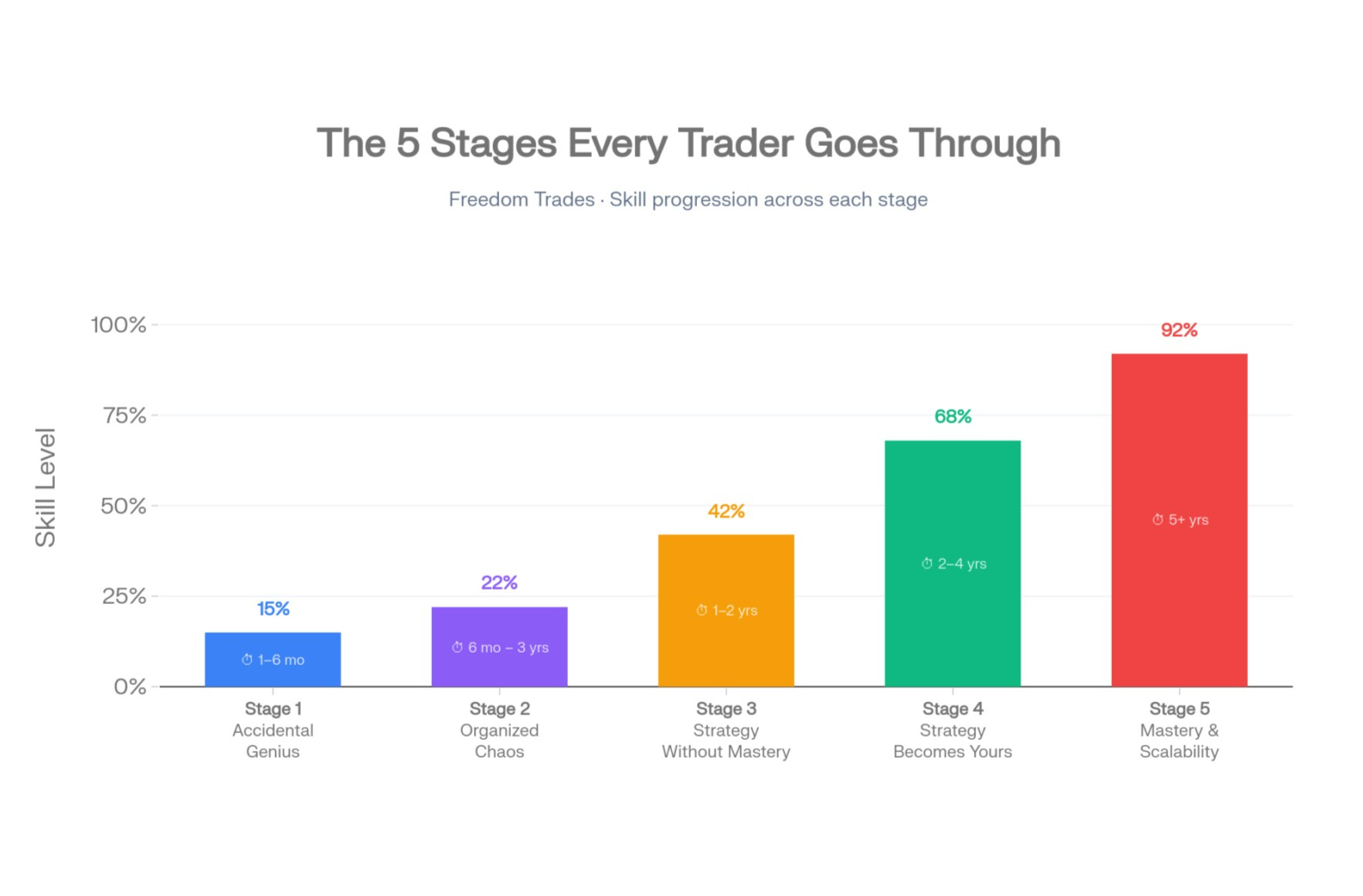
Stage 1: The Accidental Genius
Estimated duration: 1-6 months
It all starts with a winning trade.
Maybe even several in a row.
You do not know why you won, you have no clear strategy, but your account is growing and your brain draws the logical conclusion: you are good at this.
This is the stage where chaos disguises itself as “talent”.
You buy a stock because it “looks good,” you exit because you “have a feeling,” and somehow everything seems to work.
The market is in a bull run, volatility is helping you without you knowing it, and luck is your best friend, even though you think it is you.
The major danger of this stage is that you build confidence without a foundation.
And confidence without a foundation is more dangerous than a lack of confidence.
How to advance:
Document every trade. Not to brag, but to understand why you won or lost.
If you cannot explain in 2 sentences why you entered a trade, you do not have a strategy, you have luck on your side. And luck does not last.
Stage 2: Organized Chaos (or How to Lose Money in Every Possible Way)
Estimated duration: 6 months - 3 years
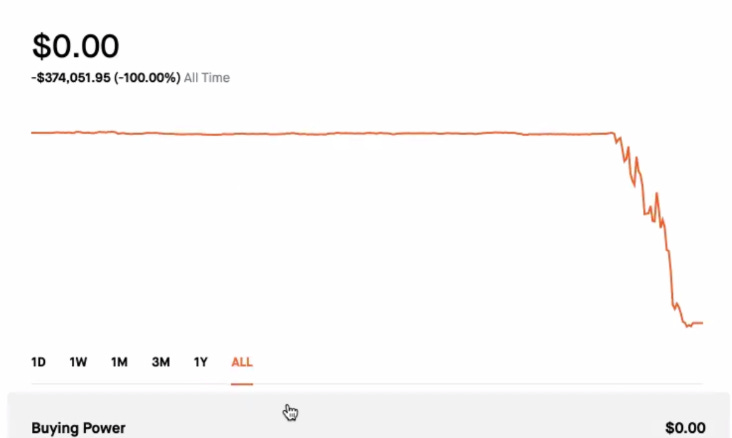
The market corrects you. And it does so brutally.
Your account starts to decline.
You look for explanations, and the internet offers you thousands of solutions.
You follow alerts from people you do not know.
You pay for tips and calls. You change your strategy three times a month.
Today you are an options trader, tomorrow you are chasing crypto, the day after you are copy-pasting after someone on Substack.
Every loss produces a new search.
Every new guru promises the perfect system.
And every new system fails, because the system is not the problem, you are the problem. Or more precisely, the lack of a system of your own, followed with discipline, is the problem.
This is the stage where most traders get stuck forever.
Not because they are not intelligent, but because they refuse to accept that the solution is not external.
They end up calling everything a scam and leaving trading convinced that it is impossible to make money. Some are actually right, for themselves, because they never made it to the next stage.
How to advance:
Stop buying solutions and choose a single system to learn deeply.
It does not have to be perfect, it has to be yours.
Study a single setup, on a single market, with a single timeframe.
Boredom is the first sign that you are on the right track.
Stage 3: The Strategy Without a Master
Estimated duration: 1-2 years
You have chosen a strategy.
You know what you are looking for.
You know what setup you are tracking.
Theoretically, everything makes sense.
In practice, you are still losing or breaking even.
Not because the strategy is wrong, but because you do not have the experience needed to apply it correctly.
You enter too early. You exit too late. You ignore an obvious warning signal because “this time it is different.”
You follow the rule in 7 out of 10 trades, but in the exact 3 where you do not, you lose all the profit from the others.
This is the stage where you learn that a good strategy applied with 80% discipline produces mediocre results.
Consistency is not a bonus, it is the baseline requirement.
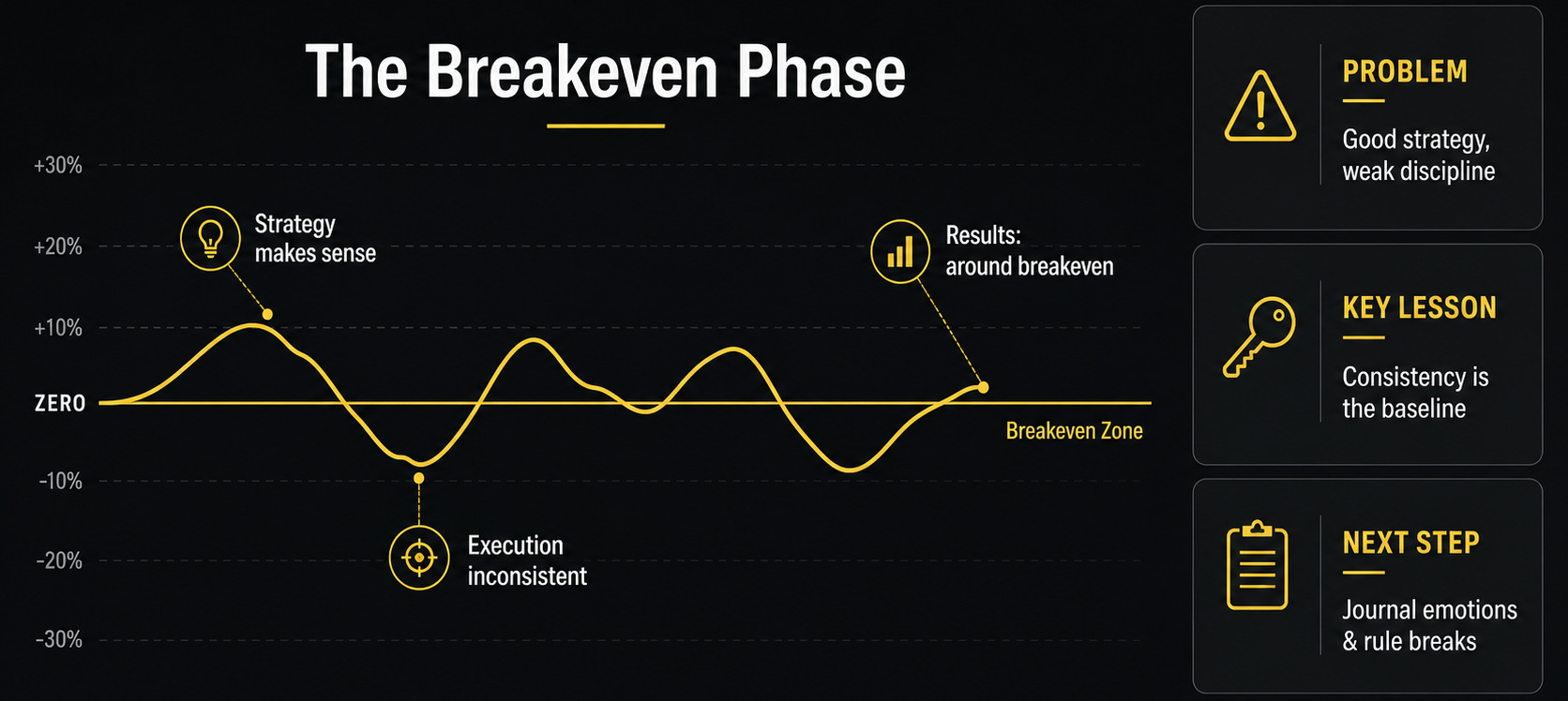
Also in this stage, you start to understand that trading is a game of probabilities and that a losing trade does not mean you were wrong.
This mindset shift is crucial.
How to advance:
Keep a paper trading journal.
Not a spreadsheet, a narrative journal.
Write what you felt before the entry, what you were thinking while the trade was open, and what you did differently from your rules.
Emotional patterns are harder to see than chart patterns, but they are just as important.
Stage 4: The Strategy Becomes Yours
Estimated duration: 2-4 years to reach and consolidate
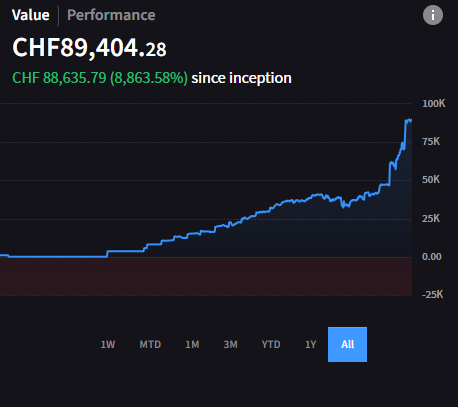
This is the stage where things start to click.
You are no longer following a strategy, you are living it.
You have taken the original framework and adapted it to your personality, your risk tolerance, the hours when you can be active, the type of setups that suit you psychologically.
You know when to push and when to stay on the sidelines.
You understand market cycles.
You know that a setup that works perfectly in a trending market can destroy an account in choppy conditions.
Drawdowns still exist, but they are controlled, expected, and no longer trigger panic.
The most important sign that you are in this stage: it is hard to explain to others exactly what you do, because a large part of the decision comes from accumulated experience, not written rules.
You have developed something called market feel, and that cannot be bought or copied.
The difference from previous stages is not that everything is easy.
It is that you know exactly why you win or lose, and that makes all the difference.
How to advance:
Document your system in detail, as if you were explaining it to someone from scratch.
This process will force you to identify what is still vague or inconsistent. Seek to understand “why” your strategy works at a market structure level, not just “how.”
Then, build systems for absolutely everything.
When everything is systematized, you are no longer making decisions under emotional pressure, you are executing a process already thought through with a clear head.
Equally important is building protection systems.
A protection system for periods of over-confidence, when everything is going well and your brain starts ignoring risk signals.
A system for days when you are not in the right psychological state, whether you are tired, stressed, or distracted, that explicitly tells you not to open any trade.
Discipline does not mean being strong in every moment.
It means having written rules that protect you precisely in the moments when you are not at full capacity.
Stage 5: Mastery and Scalability
Estimated duration: 5+ years from the start, indefinitely refined
Few people get here.
Not because it is impossible, but because the previous stages demand a patience that most people do not have.
In this stage, trading becomes an almost meditative activity.
You no longer need to “convince” your brain to follow the rules, because the rules are fully internalized.
Good decisions are made naturally, not forced.
What truly sets this stage apart is scalability and adaptability.
You can manage a larger portfolio without changing your psychology.
You can navigate shifts in market regime (bull, bear, sideways, high volatility) and adjust without panicking or abandoning your system.
You understand when the market has changed structurally and you know how to respond, not react.
Another defining element of this stage is that you can clearly articulate what you do and why.
Experience has transformed into deep understanding, which allows you to pass knowledge forward, to mentor, to build community, to educate.
Not out of obligation, but because you understand that doing so consolidates your own foundations even further.
Drawdowns are no longer emotional events. They are expected chapters in a book you have read before.
How to maintain and evolve:
At this level, the greatest threat is complacency.
Keep documenting your trades, analyze losses with the same seriousness with which you analyze wins, and stay curious.
Markets evolve, and a trader who does not evolve with them will inevitably regress.
Where Are You?
If you read carefully, you already know the answer.
What matters is that you are honest with yourself.
You cannot skip stages, you cannot buy a shortcut, but you can choose to accelerate the process.
The difference between someone who reaches stage 4 in 3 years versus someone who gets there in 8 years is, most of the time, the quality of the environment in which they develop.
A clear system, constant feedback, and a community of traders who are one step ahead of you compress years of trial and error into months.
That is exactly what I built in Freedom Trades. A real system, clear rules, risk management, and an active community of traders going through the same stages.
If you want to accelerate, your place is here.
And right now, the yearly plan is 49% off.
If you have been sitting on the fence, this is the moment.
Trade Setups of The Week
Copy My Watchlist for this week
Here are the stocks, sectors, or trends I’m watching closely.
Access my entire watchlist for free here:
My watchlist
Want more than just a watchlist?
Get an understanding of the screener, so you know exactly what to watch.
Gain access to my trading strategy!
Join a community of like-minded individuals who are committed to achieving financial freedom and taking control of their future.
Upgrade now to get the full experience!
If you think this newsletter could help your friends, share it with them so it can reach as many traders as possible.
And here’s the fun part: when you share it, you can unlock special rewards + you will look smart in front of your friends :)
“One trade closer to freedom.”
Vladislav