


This is the current value of my swing trading account.
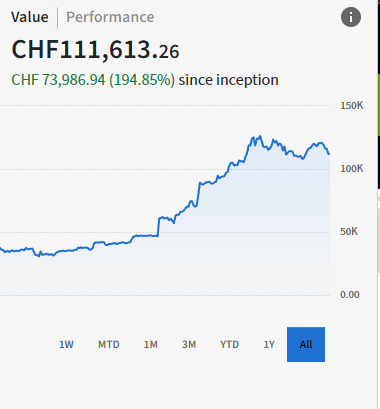
Attention: since I live in Switzerland, the currency is set in CHF (which means if you convert it to USD, the amount is higher).
To better understand the strategy we are following and not to buy blindly without any context, please read and analyze my strategy carefully:

All the positions I take during the week can be found on the Discord server or in the Freedom Trades private chat.
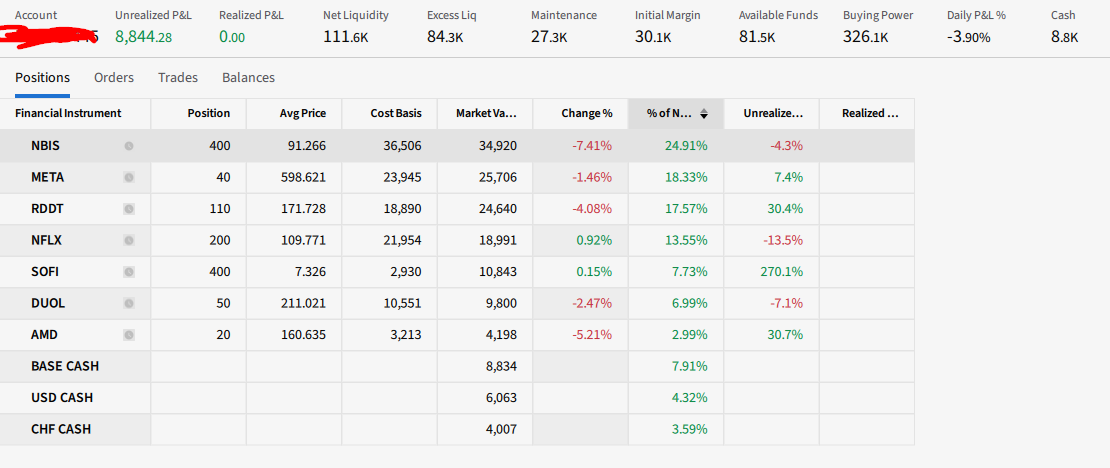
Right now, these are my positions:
Hello traders,
U.S. markets had a strong week, and on the surface, things looked calm. Most major indexes pushed to fresh all-time highs, helped by the Fed delivering its third straight rate cut and language that felt less hawkish than many feared.
Small caps led the way. The Russell 2000 jumped over 1%, which makes sense. Smaller companies are more sensitive to rate cuts, and investors are starting to sniff out value outside the mega-cap names. The Dow also had a solid week.
The S&P 500 wasn’t as clean. It gave back gains late in the week after a sharp Friday pullback.
The Nasdaq dropped over 1.6% as investors started asking harder questions about AI valuations and whether all this massive spending will actually pay off. Oracle didn’t help. Revenue missed expectations, and guidance pointed to even more capital spending. That was enough to remind the market that AI isn’t free and profits don’t arrive on day one.
On Wednesday, the Fed did exactly what everyone expected. A 25-basis-point cut, bringing rates into the 3.5% to 3.75% range. What caught my attention wasn’t the cut itself, but the disagreement. Three officials dissented. That hasn’t happened in years.
The statement included familiar language about “carefully assessing incoming data.” That’s usually code for slowing down or pausing. Powell’s press conference didn’t scream panic, but it wasn’t overly confident either. He acknowledged that rates are now close to neutral and that the Fed is in a position to wait. At the same time, he flagged meaningful downside risks to the labor market.
That tells me one thing. The Fed is done rushing. But they’re not done cutting if the data weakens.
They also confirmed they’ll step in to buy short-term Treasuries if needed to keep liquidity flowing.
Labor data sent mixed signals. Jobless claims jumped to their highest level since September. That’s not nothing. At the same time, continuing claims fell, which suggests people are still finding work.
Job openings ticked higher, but layoffs rose and hires fell. Workers aren’t as confident about walking away anymore. That usually shows up before the economy cools more meaningfully.
Bond markets reflected all of this uncertainty. Short-term yields fell after the Fed meeting. Long-term yields moved higher. Credit held up fine, especially investment-grade bonds. High yield was shakier, driven more by headlines than macro.
Stepping back, I’m still pro-risk. AI remains the dominant force in U.S. equities. But this isn’t a passive story anymore. It’s becoming an active one.
The scale of the AI buildout is enormous. We’re talking about capital spending at levels we’ve never seen. That naturally raises bubble talk. I don’t find that framing very useful. Bubbles only look obvious after they burst.
The better question is whether AI can do something no major innovation has done before. Break the U.S. out of its long-term 2% growth trend.
For 150 years, every major breakthrough, from electricity to the internet, kept growth steady. AI could be different because it can speed up innovation itself. That’s the real upside. A self-reinforcing loop where AI helps create better AI, faster productivity, and entirely new revenue pools.
But here’s the reality. Even if those revenues show up, we don’t know who captures them. Capex may pay off for the system, not for every company. That’s why stock picking matters more from here.
This buildout also creates a financing hump. Big spending now. Revenues later.
Tech balance sheets can handle it for now, but combined with already stretched government debt, the system becomes more sensitive to shocks. Especially bond yield spikes.
Looking ahead to 2026, I think we’re near the end of the easing cycle, but not quite there. One or two more cuts still feel likely, putting rates closer to 3%–3.5%.
A softer labor market early next year would support that case. We’ll get delayed payroll data soon, and expectations are already low.
If job growth stays sluggish and consumer spending starts to roll over, the Fed will respond.
But don’t expect aggressive easing unless something breaks. Inflation is still above target and likely stays there into 2026. The Fed knows that cutting too much, too fast, risks lighting that fire again.
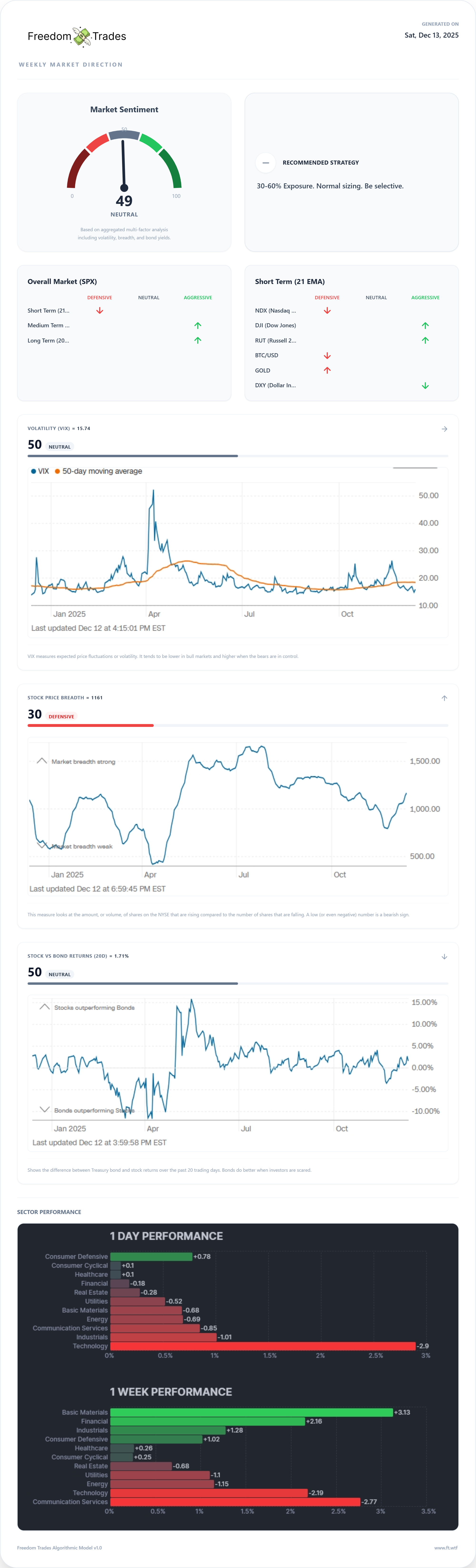
And all of this is also reflected in the weekly market direction algo, where the data is mixed and neutral.
You can copy my full watchlist for next week here.
High Probability Trades
To start, I want to say that I believe the focus this week, and in the months ahead, will be on Aerospace and AI.
Aerospace in particular, because of the recent rumors that SpaceX is planning to go public in 2026.
Multiple news outlets have reported that an IPO is already in motion, following a recent share sale that valued the company at roughly $800 billion.
If this happens, it would be the largest IPO in history by far, and it would create a major ripple effect across the entire market.
Naturally, many companies in the aerospace space have already started to move. These are what we call sympathy plays.
There are plenty of space-related stocks in the market today that could be worth significantly more, even looking just a few months ahead.
So in today’s edition, I’ll walk through a few potential names.
Before diving into the charts, these are the stocks I identified from the industry using the following filters: market cap above $300M, average volume over 750K, aerospace industry, and weekly volatility above 5%.

They are sorted by YTD performance.
Save all the names and add them to your watchlist!!!
Ticker: RKLB
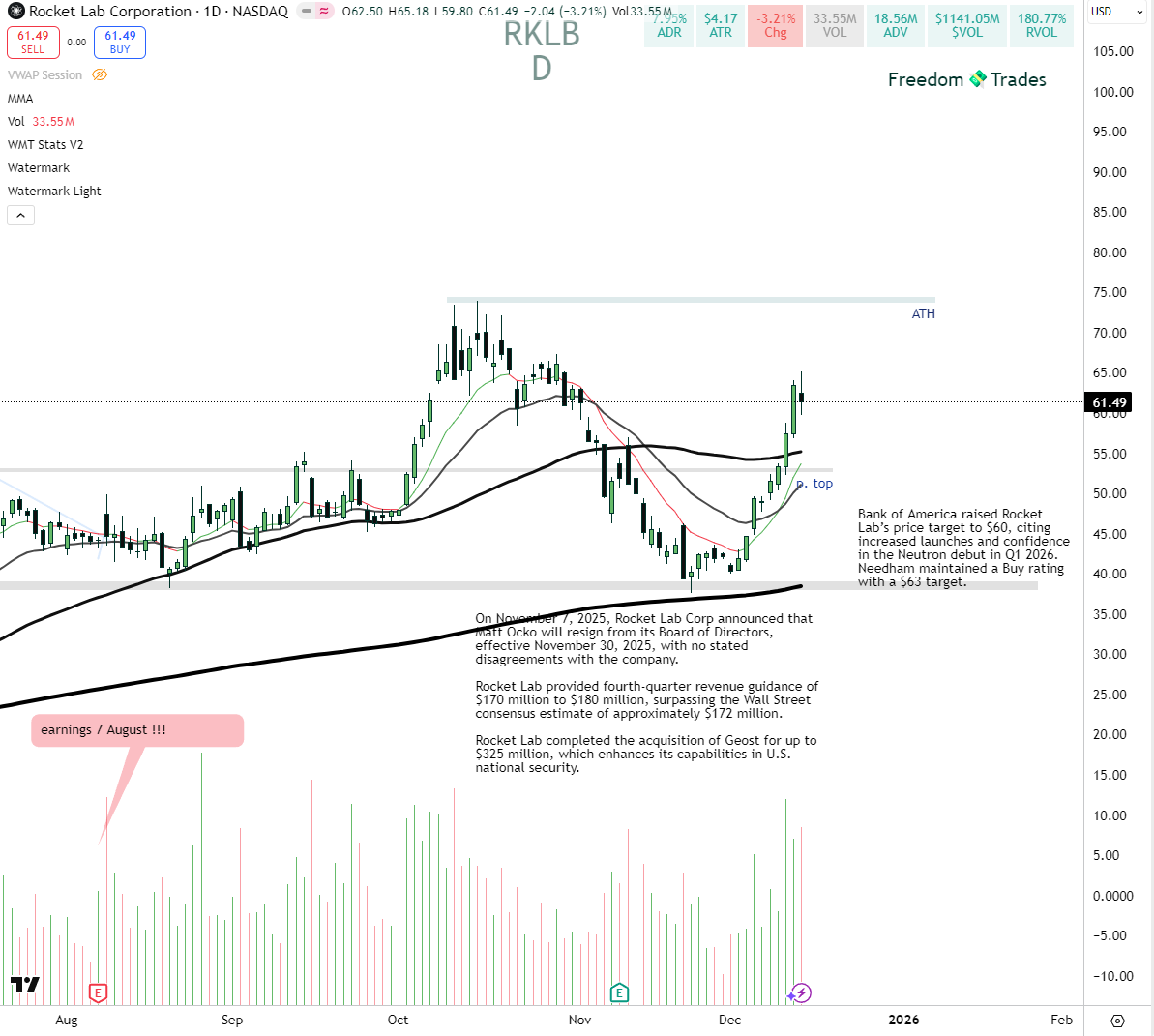
It’s obvious that out of all of these, this one has the most potential. (same with ASTS)
And before anyone says, “Well, yeah, after it’s already up 30% in a week,” go back and check last week’s High Probability Trades. I called it when it was at $49 per share.
Look at how well it held that level, even with a red day on Friday. It actually managed to push to a new high. This thing wants to run.
What I would do is wait for a pullback toward $55, right around the 50 SMA, and then start building a position, if we get that opportunity.
That said, I think it’s likely to retest its all-time highs in the near future.
Ticker: KRMN
I would put $PL in second place, but unfortunately, this ticker has already made its move. Even though I had it on my radar last week, I missed it. That said, we can still take advantage of it if it pulls back and retests the $16 area.
Now, back to KRMN.
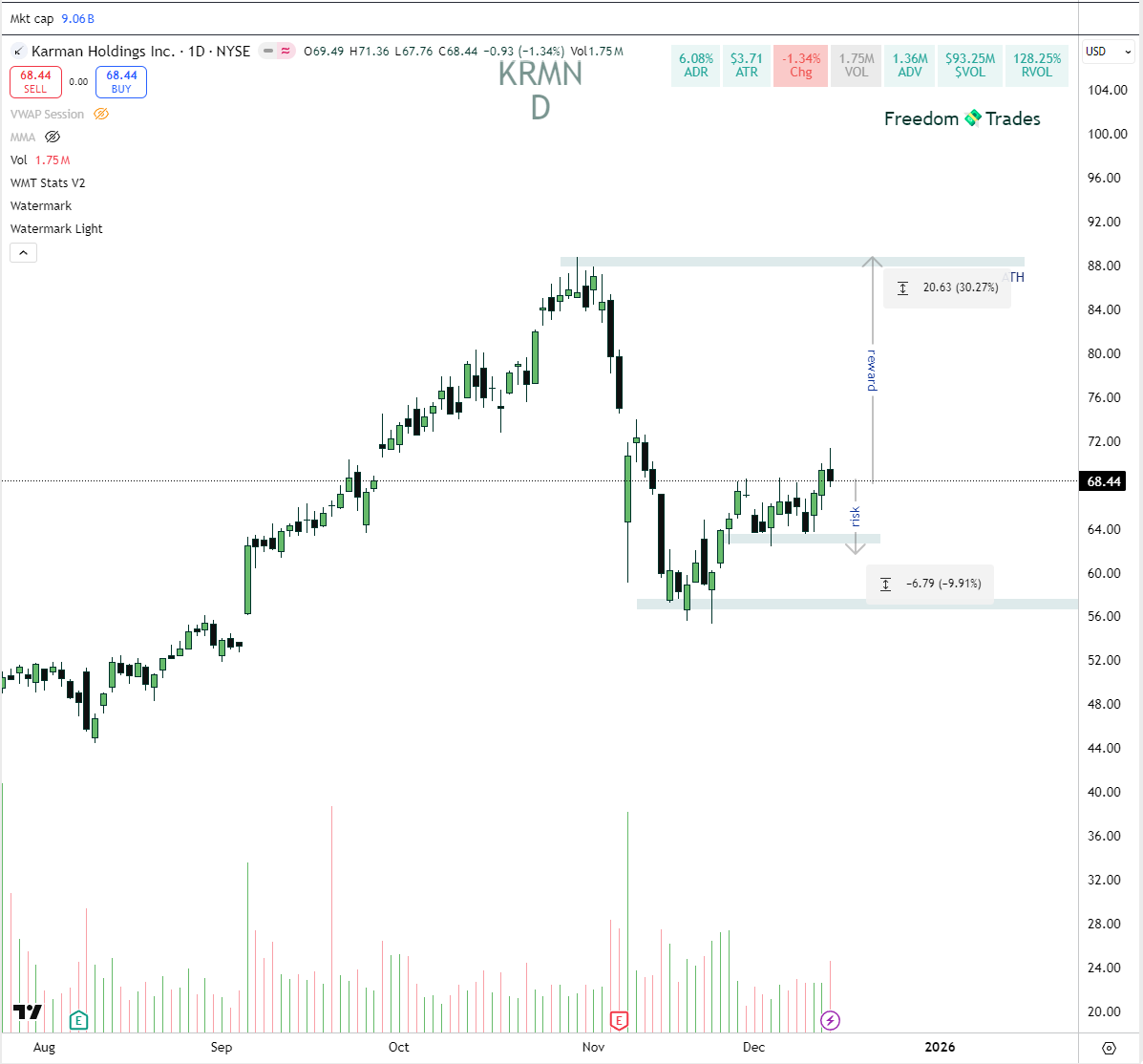
This is one of the cleanest charts out there. The ticker has had strong momentum ever since its IPO.
After earnings and the red November candle, we saw a decline of more than 35%. It found a bottom around $57 and now looks ready to retest the 50 SMA.
I would buy the breakout if it can hold that area next week. We’re looking at a potential 30% upside if it attempts to retest the ATH, versus about 10% downside risk if it breaks below the previous support.
From a risk-to-reward perspective, this trade makes sense.
Ticker: AVAV
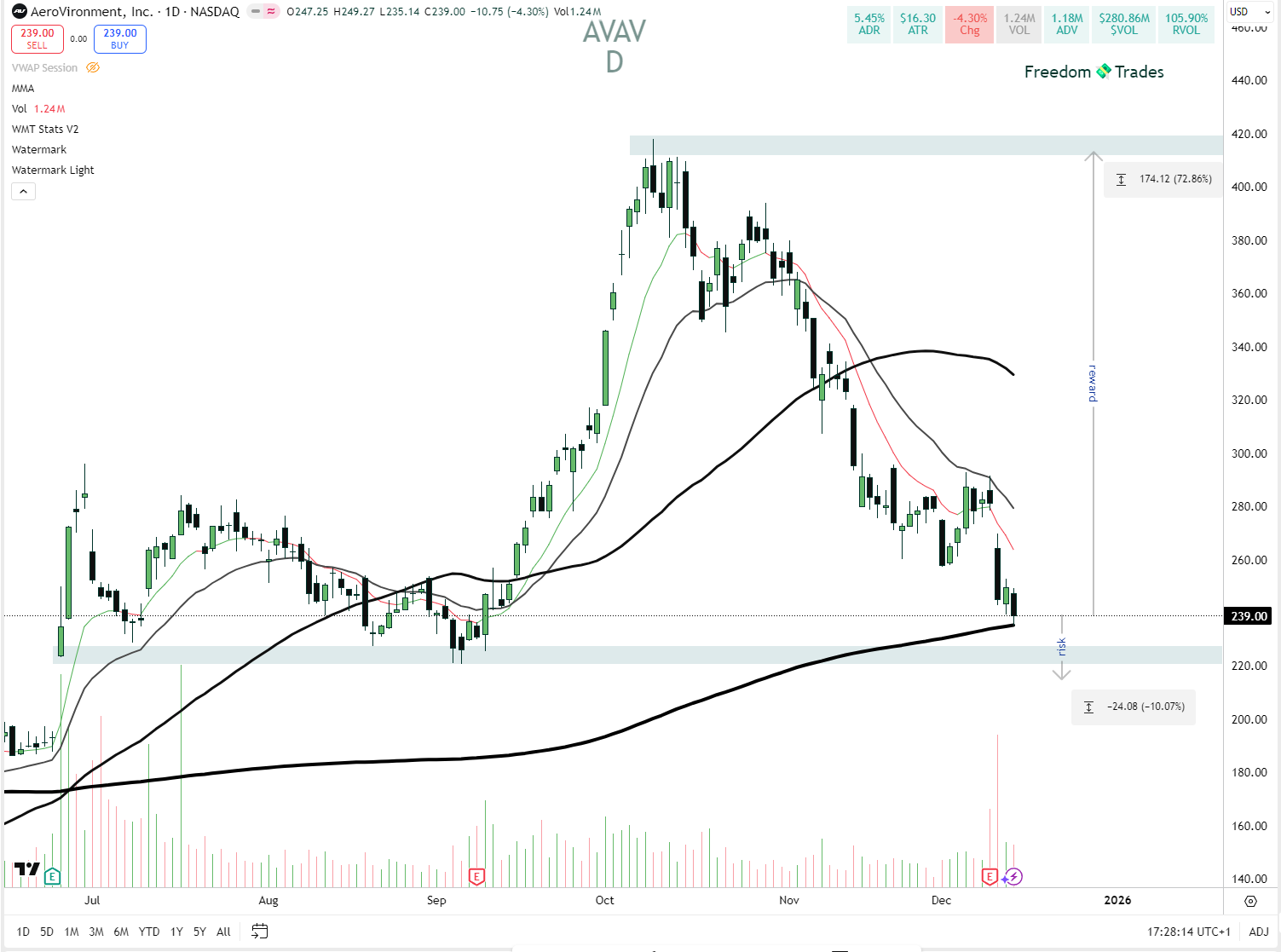
Out of all the opportunities, this one has the lowest risk and the highest reward.
Even though AVAV falls more into the defense category, it’s still heavily involved in the aerospace space.
This stock clearly has momentum. It’s up 51% YTD, and price is now sitting at a key support zone, right around the 200 SMA. That’s a level where I personally like to buy.
The only issue is that they recently reported earnings, and the market reacted with a 13% drop in a single day. Normally, after a move like that, price tends to go through a phase of compression and stabilization, trading in tight ranges before attempting to push to a higher high.
So we may need some patience with this ticker until it proves itself.
Other B setups
Ticker : ACHR & KTOS
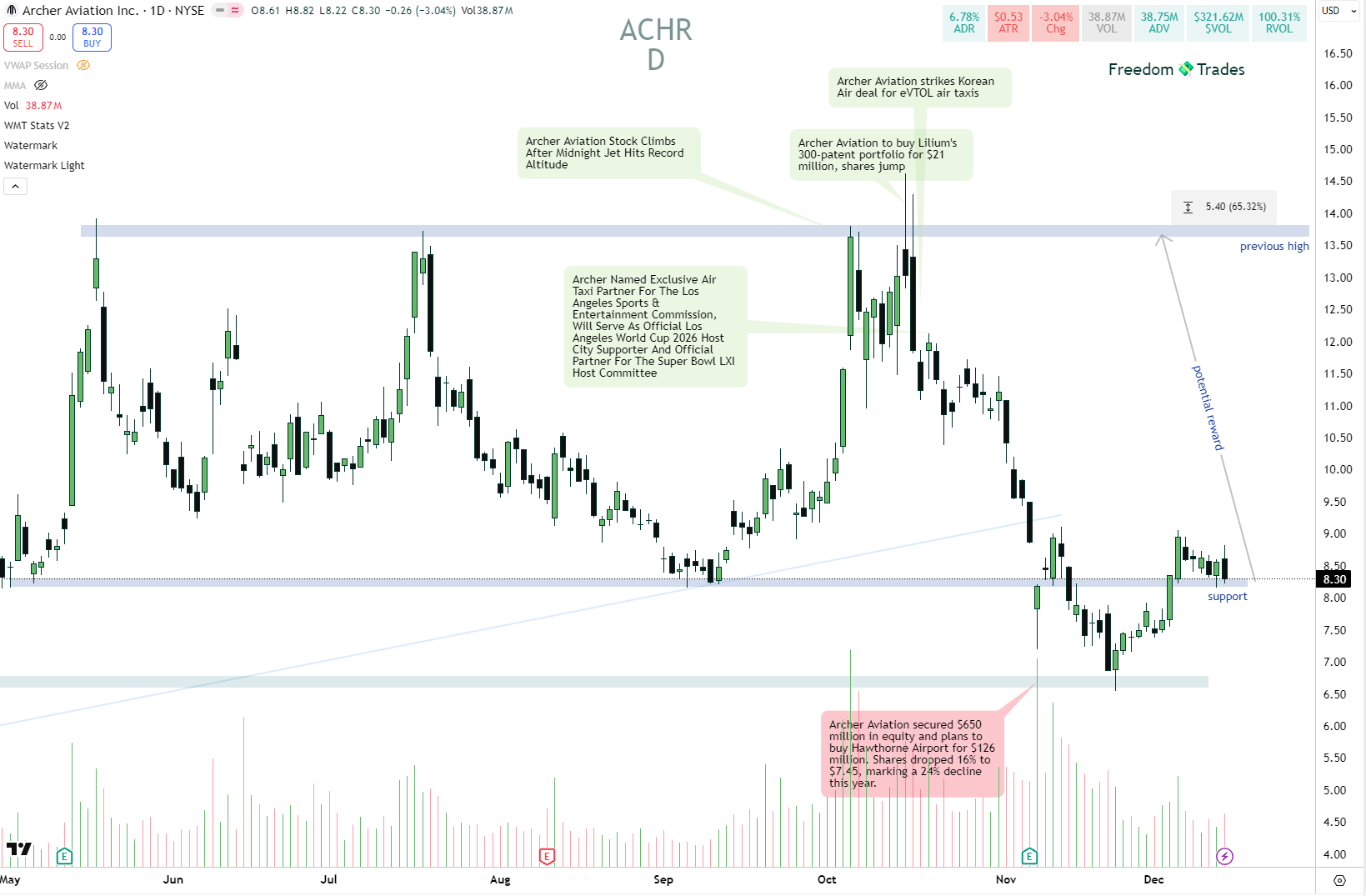
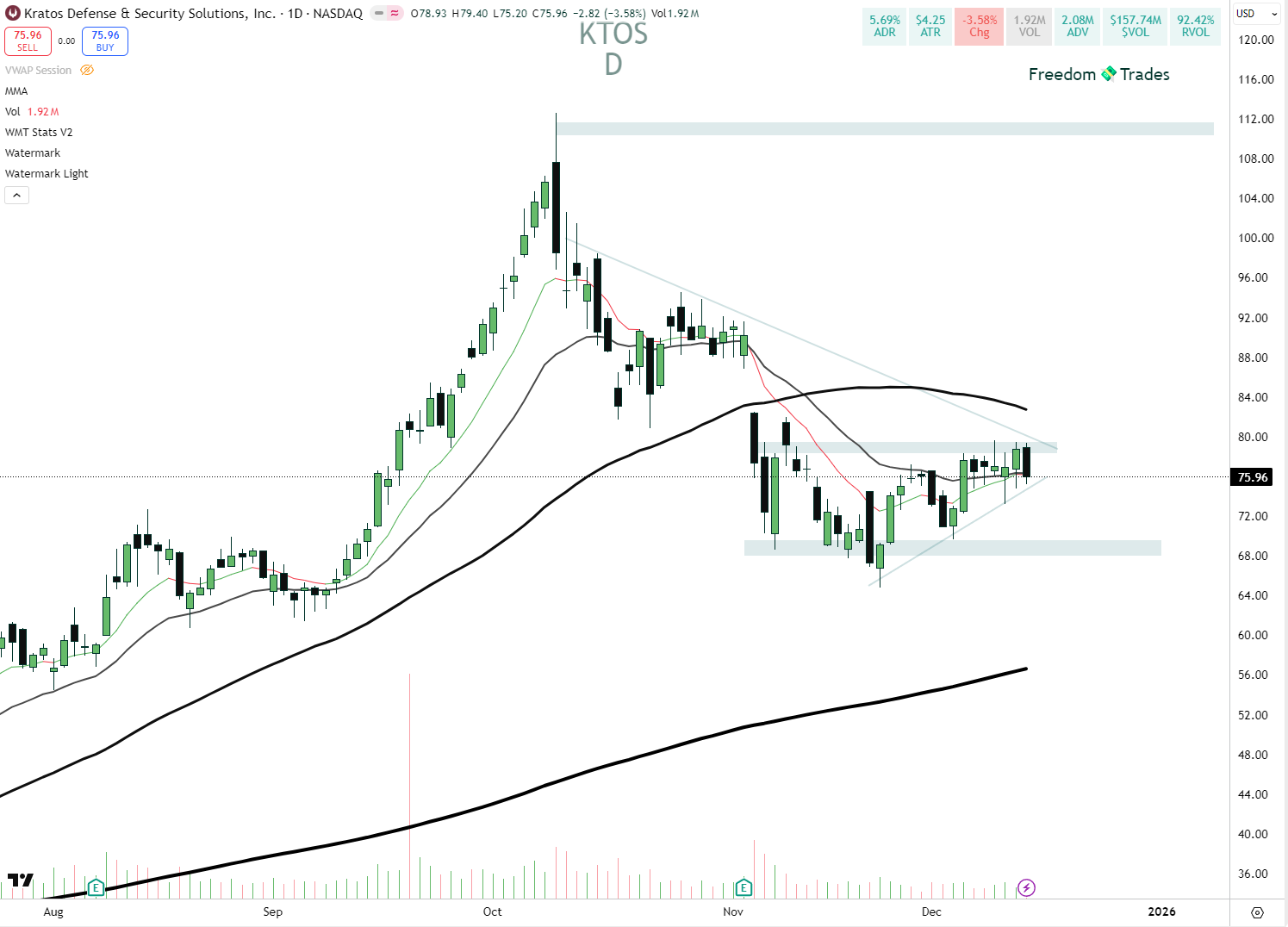
Other important tickers you should keep an eye on:
PL , ASTS, RDDT, NBIS (I am super bullish on this one), SNDK
Important links to read and understand:
🟢How to define whether a setup is A+, A, or B. (Click here)
Soon I will add more to this category..
Context
Check the chart watermark to identify the analysis timeframe.
The gray/blue zone marks support and resistance.
The slim blue lines are trend lines
The moving averages used are 200 EMA, 50 EMA, 20 EMA, and 10 EMA.
The 200 EMA is the most important for trend direction.
The 10 EMA is used for exits, if you are in profit and the price closes below the 10 EMA on a daily close, exit the position. (wait for EOD before closing)
You are free to choose/decide when to take profits, but the most important is to place your stop loss at -10% (from entry price / avg price if you dont enter with full size).
For an A+ setup, you can extend it to -15%, but never let a position go beyond that.
Important: That 15% refers to your position size, not your total capital. You should never risk more than 3% of your total capital on any single trade.
I encourage you, if you’re already a PRO member, you can upgrade your membership on the Discord server (at no extra cost) and get access to a fully private server dedicated to PRO members, for networking, trade ideas, insights, and alerts.
Connect PRO account with discord server
P.S.: The email you use on Discord must be the same as the one on Substack.
If you get an error or can’t make it work, message me privately, I might be able to help you out. 🙂
“One trade closer to freedom”
Vladislav