


Like every beginner trader, I used to believe that being in a drawdown is proof that your strategy has no edge.
I felt like a failure every single time.
To avoid this feeling and make it pass as quickly as possible, I would double my position size just to get out of it faster. Just to feel like a winner.
Obviously, I was doing nothing but digging myself even deeper.
I am going to explain my experience, how I went through my first drawdown, and how you can get through a drawdown on the right side.
What changed the way I look at drawdowns
It’s actually pretty simple.
I was scrolling through social media and a video of Qullamaggie caught my eye.
At one point, he says this:
“You’re gonna be in a drawdown 99% of your time.”
That statement was mindblowing for me at that time.
I couldn’t fathom… what do you mean I’ll be a loser 99% of the time???
But then I realized why this is normal.
You will never sell at the top or buy at the bottom.
As a swing trader, a healthy equity curve will move in quick bursts of all-time highs and then it will move either sideways or down.
Here’s an example:
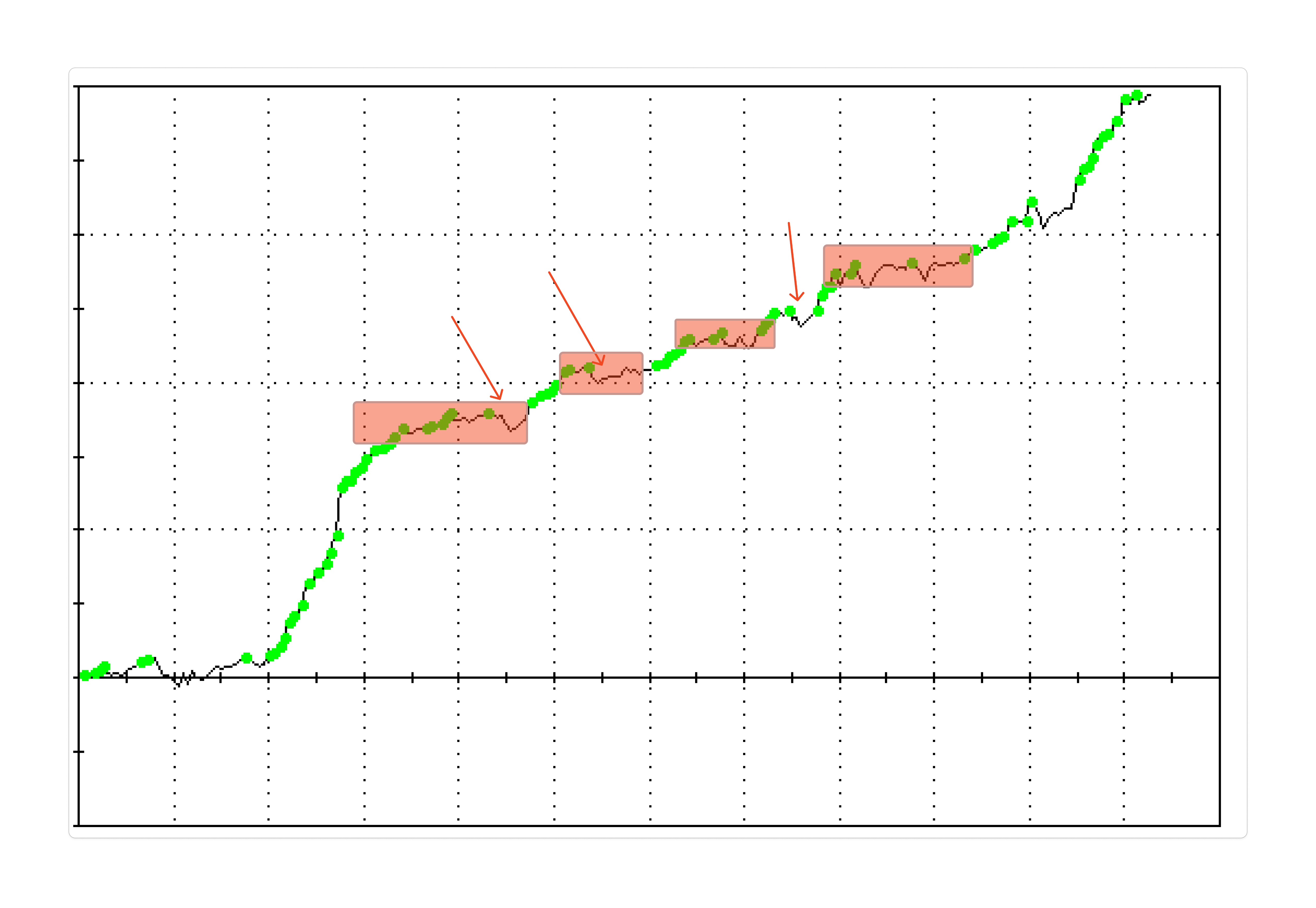
So, what I want you to understand so far and truly internalize is that: IT IS PERFECTLY NORMAL TO HAVE DRAWDOWN PERIODS, especially as a swing trader.
There is no strategy without drawdowns.
Even the simplest strategy, which is buying the Index SP500, experiences drawdowns.
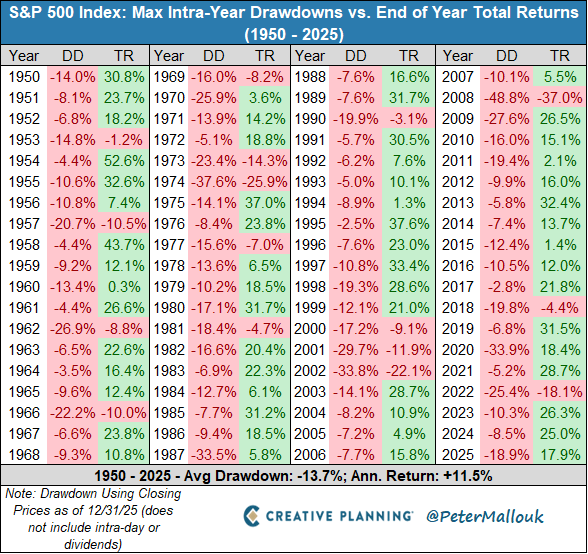
Now, what is not normal is to have a drawdown larger than 30-40-50%.
Your mentality shifts massively when you see such drawdowns, and you will have execution errors.
I wrote more here about what happens in your brain when you experience losses here.
For me, a huge breakthrough as a trader was the first time I managed to get through a drawdown systematically (meaning intentionally, without sizing up and having risk management rules).
How to get through your first drawdown
Why is it super important to achieve this and why does it give you an advantage? Because an experience is formed in your brain that you can later anchor to and rely on that past experience when this happens again.
Something like, “Ah, I’ve been through this before, I can do it again.”
Then, on the first day or the first few days when you incur that drawdown, it is going to suck; no matter what, it is going to be painful.
The number 1 thing you can do to improve that feeling is by throwing more pain at you.
Let me explain what I mean by that :))
The number 1 thing you should do is reviewing/analyzing your trades and market environment.
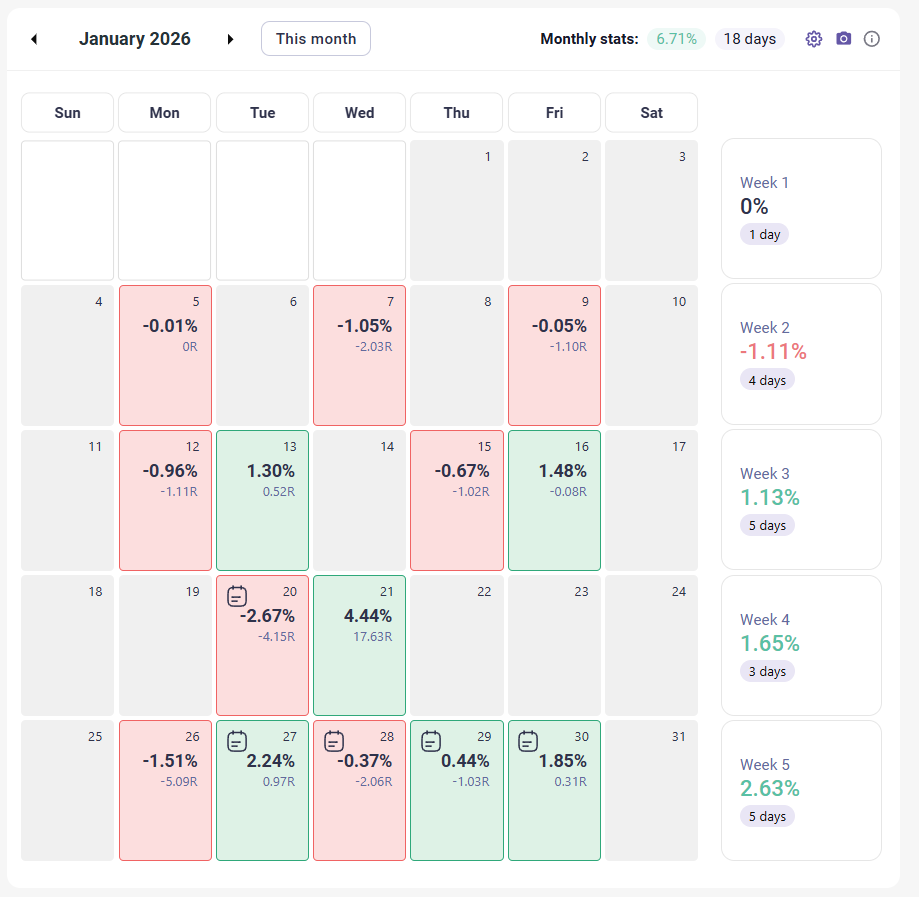
It is going to be painful because you are re-living the trauma that put you in this position. However, something good is born from this: namely, you start to be aware of where it went wrong.
Now you have awareness, then you understand what you could have done better, and then you know exactly what you need to do.
So first it gets worse, but then it gets better.
Now you have a mental feeling that you are prepared!
The number 2 thing you should do is reduce your size immediately!
Risk management during drawdowns
And then comes the next part, which is execution; you have to execute your plan and respect it or else you will go again in the next spiral, where it will be even more painful because you will lose your “self confidence” and then it will take more time.
So, without this component of analyzing your trades (which comes from having a trading journal), it will be mega difficult for you to get through a drawdown.
Because you are shooting blindly, based on feelings.
And it will make you even more emotional.
The more drawdowns you get through in your career, the less painful they will be because you become desensitized.
During these times, I keep cutting my position size by half until it is so small that the equity curve is not affected by losses at all.
Here are some good general rules that will save you tons of money:
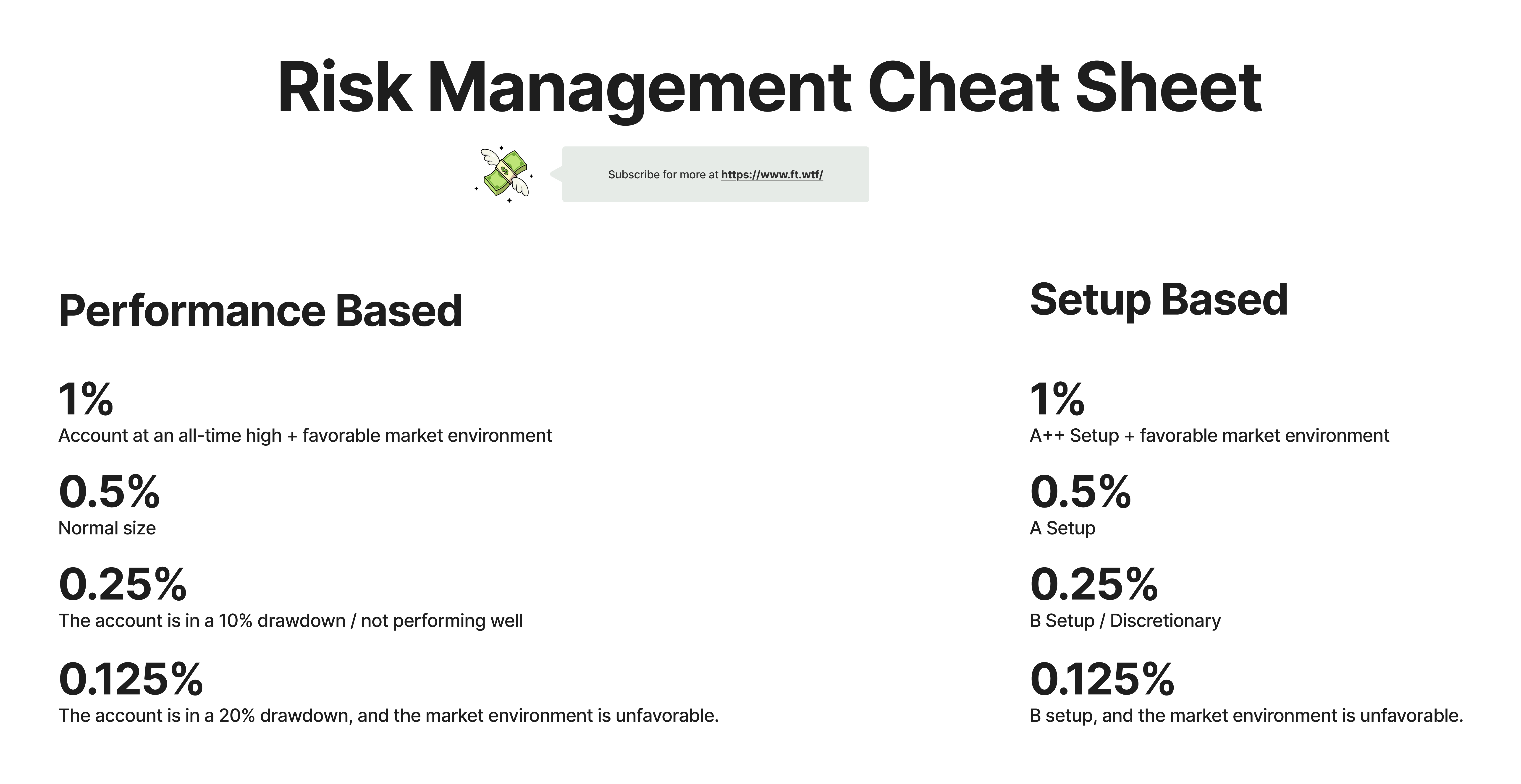
Normally, these must be adapted to your strategy, but in general, they should save you.
I return to my normalized position size when positions start going your way.
What I mean by this is that, when the market is favorable, your trades simply work; you buy something and it instantly goes your way.
This is not the case in the current environment.
Now, as a beginner, to assess what kind of environment you are trading in, simply look at indicators like what the SPY 0.00%↑ is doing, is it chopping around, or is it below the 20 MA?
Then you can look at $VIX to get an understanding of market volatility.
If it’s above 25, I’m telling you that this is not a suitable environment to buy breakouts :)
The more experience you gain and the more cycles you experience, the more you will develop a “feeling” and adapt faster to conditions as you become aware of them.
Until then, you can rely on the best indicator, which is your equity curve and the data from your trading journal.
It is as simple as that: if you are performing poorly and taking multiple consecutive losses, cut your position size in half. If you have a drawdown bigger than 5%, immediately cut size.
If you still perform poorly, cut again. And then, once you see a position is performing, you build another one and see if it works.
Then, with the unrealized profits you have, you can build another one. It’s all about progressive exposure; you don’t want to jump in too fast, as the general market direction/trend doesn’t change on a daily basis.
Actionable steps to take during a drawdown
Now to summarize and actually give you some actionable steps.
Stop the Bleeding: Stick strictly to your risk management rules. Do not “size up” to recover losses quickly; maintain systematic execution to prevent an emotional spiral.
Lean Into the Pain: Immediately begin reviewing and analyzing your recent trades and the current market environment. Acknowledge that re-living these trades will be “painful,” but accept it as a necessary step.
Audit via Trading Journal: Use your journal to identify exactly where the strategy or execution failed.
Execute the Corrective Plan: Once you understand what went wrong, follow your adjusted plan without deviation. Consistent execution is the only way to rebuild self-confidence and avoid a deeper psychological spiral.
Build Your “Mental Anchor”: Document the process of getting out of the drawdown systematically. Use this successful recovery as a reference point for the next time you face a dip in equity.
I have shared with the Pro community in more detail everything you need to do and my strategy.
If you want to join us, there are already over 100 traders there.
right now, the yearly plan is much cheaper than the monthly one and it is definitely worth joining. We're waiting for you inside!
Trade Setups of The Week
Oil at $90, Jobs Slumping: Is the Bull Market Officially Dead?

This week’s PRO report breaks down my full momentum stock watchlist, including the setups I’m watching.
You’ll see my portfolio, my open positions, and the exact stocks I’m targeting.. all based on the same swing trading system.
If you want to trade smarter ,not longer , and get my weekly watchlist with setups, and portfolio breakdowns, this one’s for you.
Copy My Watchlist for next week
Here are the stocks, sectors, or trends I’m watching closely.
Access my entire watchlist for free here:
My watchlist
Want more than just a watchlist?
Get an understanding of the screener, so you know exactly what to watch.
Gain access to my trading strategy!
Join a community of like-minded individuals who are committed to achieving financial freedom and taking control of their future.
Upgrade now to get the full experience!
If you think this newsletter could help your friends, share it with them so it can reach as many traders as possible.
And here’s the fun part: when you share it, you can unlock special rewards + you will look smart in front of your friends :)
“One trade closer to freedom.”
Vladislav
👍
Very sensible