



Dear traders,
This is what I would do if I started over from zero and trained myself, with the goal of becoming a profitable swing trader in the shortest time possible.
1. Build the Foundation With Three Books
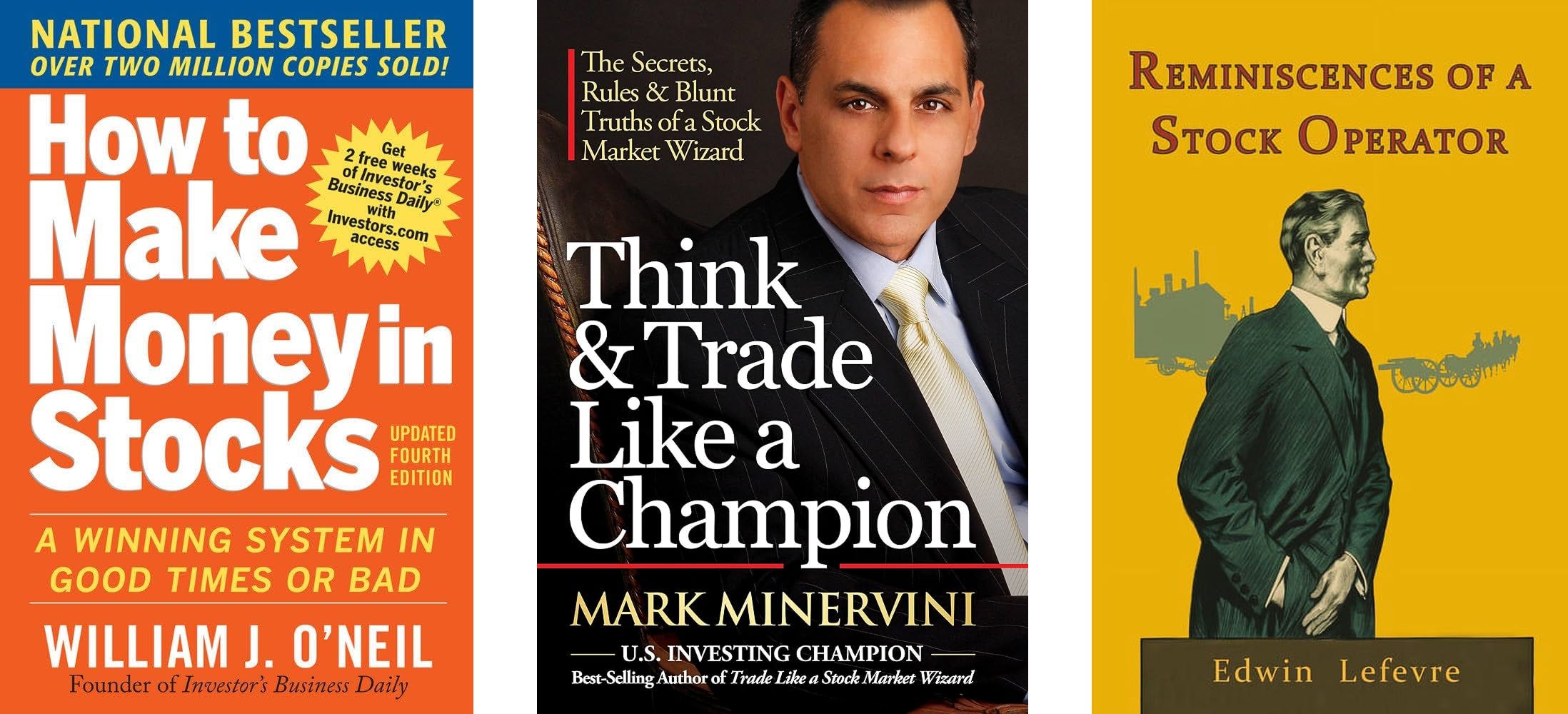
I would start by reading these three books in this exact order:
How to Make Money in Stocks by William O’Neil
Think and Trade Like a Champion by Mark Minervini
Reminiscences of a Stock Operator by Edwin Lefèvre
2. Study Past Winners (2016–2026)
Once I had this foundation, I would study the past winners from 2016 to 2026.
the last 10 years is enough for now.
Markets evolve, and what worked a century ago doesn’t always work today. The core principles in Reminiscences of a Stock Operator and How to Make Money in Stocks are timeless, but liquidity, price action, and volatility look very different now.
That is why I recommend studying the last 10 years of stocks first, and not starting with the older ones. Once you finish with these, you can go further back in time.
I would study only the stocks that had a performance of at least 100% year-to-date in that respective year.
For example, Nvidia was a huge winner in 2025, along with SNDK, MU, PL, Rocket Lab, and so on.
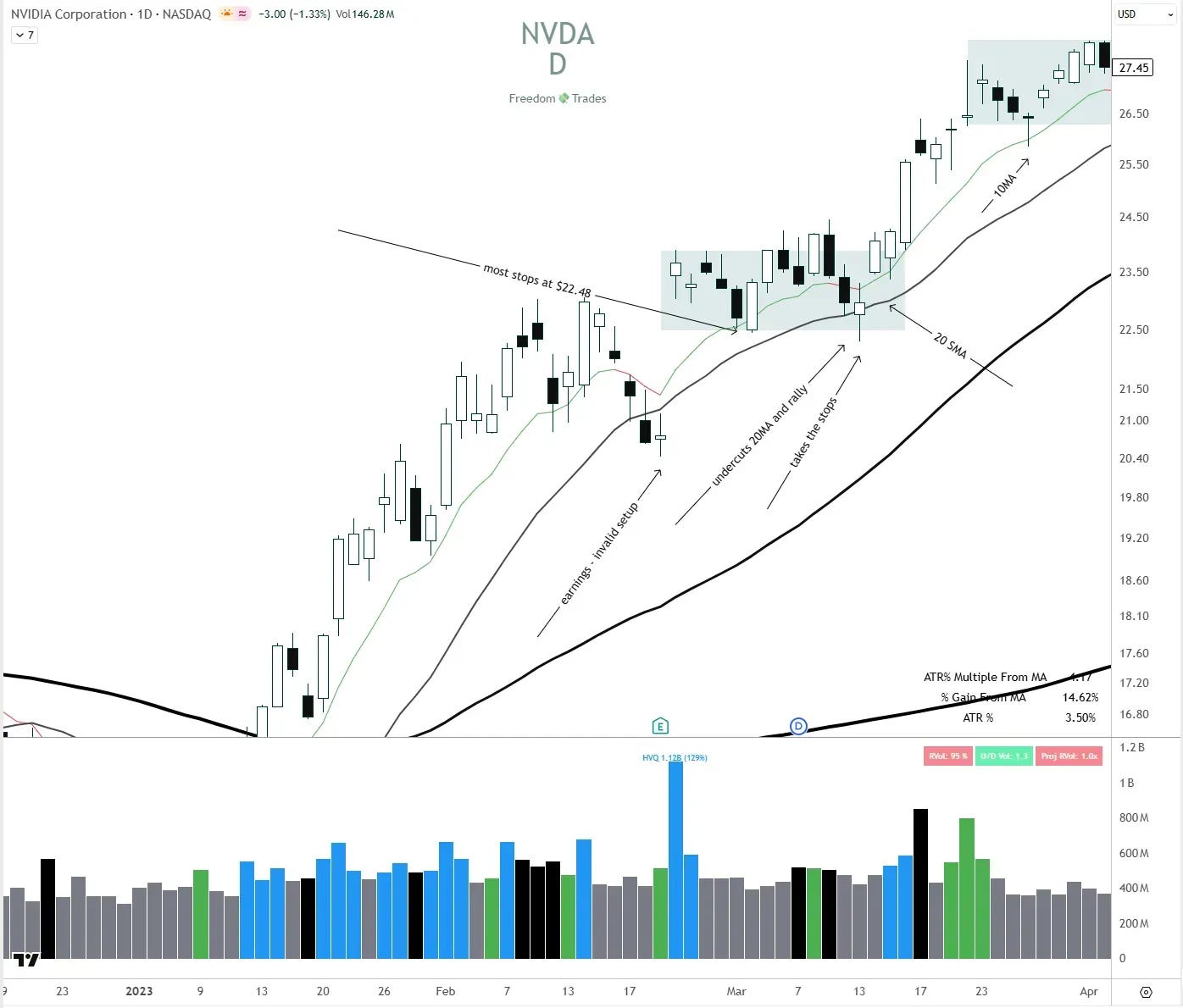
Take any chart, annotate it, and ask yourself:
Where would I have entered if I were in front of the screen right now?
At what moment and why would I have entered?
What is the setup that formed?
What would my entry and my stop loss be?
What was the general market, the indexes, doing during that time?
What kind of volume did it have on the day?
Where should I have taken profit, and where should I have exited completely?
Do this with every winner, studying it in the year it performed.
Pro tip: You can do this while reading the books. As soon as I learned a new concept, I would take a chart and see where I could identify that concept.
You do this to build mental memory, a kind of sixth sense.
When you are in front of the screen dealing with stress, fear, or FOMO, you will act with your subconscious and the knowledge you have built up until then.
You create that mental memory by studying thousands and thousands of charts. Nobody else will put in the hours for you.
That is how you build confidence and become an independent trader.
Once you learn the skill, you’ll have it for life..
3. Master Stage Analysis, Leading Groups, and Relative Strength
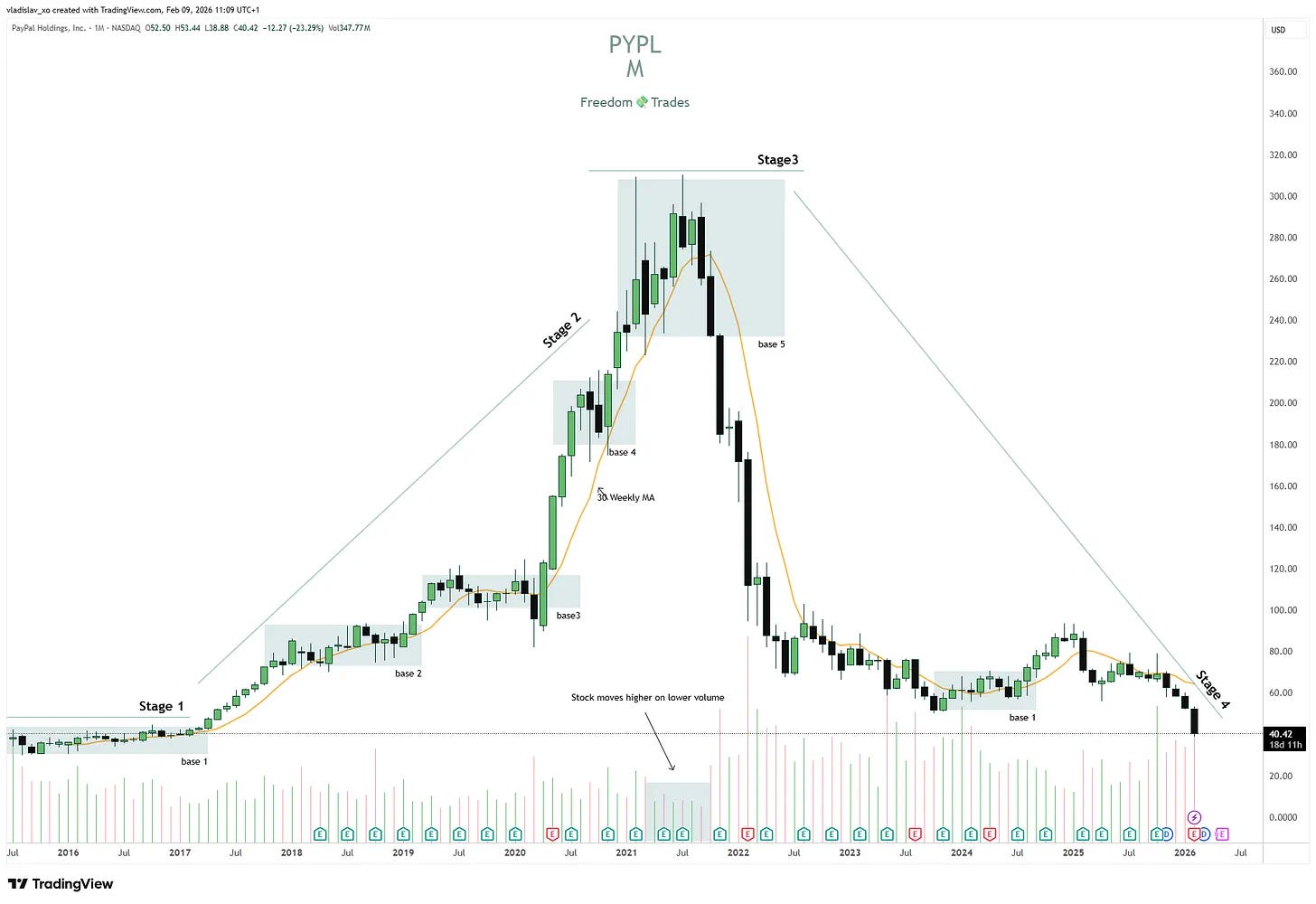
Another thing I want you to learn is Stage Analysis by Stan Weinstein.
Once you understand the stages a stock goes through, you will start to see the market differently, just like Neo from The Matrix started seeing the world in code.

You will understand why a stock in a certain stage has a higher probability of going up or down, allowing you to trade with the trend and increase your probability of success.
As you learn this concept, open the charts again and annotate every stock you analyze:
What happens when it is in Stage 1?
What happened when it moved into Stage 2?
Where is it in Stage 3?
When should I have shorted it as it went into Stage 4?
What were the market, the index, and the group doing at that moment, and who was the leader in that group?
Once I understood the concepts of William O’Neil, Mark Minervini, and Stan Weinstein, I would identify the groups that performed well.
For example, in 2025, the AI and memory stocks trade worked very well.
I would analyze who the leader in memory was, who the leader in neocloud stocks was, and how the other competitors in the same group, sector, and theme acted.
Which ones were the laggards? Which ones moved slower? When the market fell, which one fell first, which one fell harder, and how did the leader act?
I would do this for every year over the last 10 years.
Always focus on the leader.
They break out from the base the fastest, drop the least during corrections, have the highest relative strength, and bring you the biggest returns.
Look at neocloud before this correction happened: look at Nebius versus CoreWeave, leader versus laggard. Look at memory stocks. Observe these patterns.
Next, learn about relative strength.
Observe how on red days, stocks with relative strength do not drop as hard, or maybe they are flat, or maybe they don’t drop at all.
Focus on those stocks.
If I could predict the future, something nobody can do, I would use relative strength. Those stocks give you clues about the future.
Join 3,000+ traders
For less than $0.80/day, unlock a proven swing trading strategy, real-time trade alerts, and access to a private Discord community.
4. Risk Management, Strategy Mechanics, and Psychology
Once I understood these fundamentals, I would move on to the next step: accessing my strategy, which I shared on Freedom Trades.
Here is the order I would follow:
Risk management: Study risk of ruin, stop loss, position size, and trade management.
Strategy mechanics: Study tools, scanners, indicators, and setups.
Psychology: Only when you master the above should you dive into the effects of losing, mental biases, fear, greed, hope, and how to overcome them.
the focus should be on risk management!
I would go deep into risk management to understand the math behind my edge, and how I can effectively make it impossible to ruin my account or blow it up.
5. Paper Trading, Live Trading, and Journaling
Only now, I would start trading.
If you are more conservative, start with paper trading.
You will 100% make mistakes, and it is better to make them for free.
Once you master that, move to live trading.
In live trading, I would never risk more than 0.10%, (yes,10 times less than one percent)
I want all the mistakes I make not to affect my equity curve at all, while still having a little skin in the game so I can feel the emotions of losing and making money.
Before taking any trade, I would set up a trading journal synced automatically with my broker.
I am too lazy to enter every trade manually, and in the world of traders, remember: WHAT DOESN’T GET MEASURED DOESN’T GET IMPROVED.
PRO TIP: keep a physical journal where you write down your feelings, emotions, and mistakes so you can learn about yourself too.
At the beginning, at the end of every week, I would review both journals, look at every trade, see where I went wrong, and pick just one thing to work on for the following week.
Over time, I personally do this once a month, though at the beginning I did it daily
6. Situational Awareness
Next, I would study situational awareness. Beginner traders take their biggest losses when they force trades in a weak market (I am guilty of that one too).
Learn when to trade and when to sit out. Cash is a position too.
You can implement a simple rule like: if the general market is below its 50-day moving average, I don’t look for breakout trades, or I don’t take new positions if the VIX is above 30.
I wrote more about this here.
7. Use Community Wisely and Stick to Your Strategy
While trading, I would use communities that share my style.
Because you are in Freedom Trades community, I would use Discord to ask questions to other traders or those you think are better than you.
If the community has signals, I would look at the trades they took and ask myself:
Why did he take that trade?
What did he see that I didn’t see?
What was his entry tactic, entry price, and exit price?
However, I would never blindly follow signals.
I have never done that in my career, because those ideas are not yours, and you cannot have the necessary conviction until you form it yourself by studying hundreds and thousands of hours on charts.
Take different concepts and adapt them to your style, character, and personality.
You don’t have to reinvent the wheel; simply do what already works.
Once you choose a strategy, stick with it for at least 6 months.
That is the absolute minimum, and even 6 months is very little because you haven’t gone through a full market cycle yet.
You need to see how it performs in a choppy market, a bull market, and a bear market.
You will not succeed in 6 months, a year, or even 2 years.
The vast majority, and even then only a few, succeed in year 3 or after 3 years. Trading is a long-term endeavor.
When you fail, it is only a failure if you learned nothing from it.
Track your mistakes so you don’t repeat them.
I would gradually increase my risk (from 0.10% to 0.20%) only after I have at least 30 properly executed trades.
Avoid the trap of making constant changes.
If something isn’t working for a month and the problem is your psychology or discipline, work on yourself and change it.
When it comes to strategy, you need consistency. Don’t change your strategy every week or every month, or you will never be profitable.
Find a strategy that has alpha and stick with it.
8. I would build a routine around my schedule.
If you have the chance, check how your watchlist performed at the end of the day.
Go through your watchlist and set alerts.
If not, you can do this every weekend. It works perfectly even if you have a full-time job (believe me, I did this for 3 years before becoming a full-time trader).
I shared my routine here.
This is what I would do if I started over from the beginning. It takes much longer than a week or a month.
I hope I didn’t disappoint you when I said “fast,” because fast is the path to failure in trading.
And know THAT
You Don’t Have to Do This Alone
Look at that list again.
It’s a lot. And most traders who quit don’t quit because they lack talent.
They quit because they do it alone, with no one to ask when a trade goes wrong, and no one to show them what they missed.
That’s why I built Freedom Trades.
Inside, you get my full strategy, High Probability Trades every Saturday, the tools we built to find leaders faster, and a Discord full of traders working through the exact same steps you just read.
You can see my trades, ask why I took them, and build your own conviction instead of borrowing mine.
If you’re in this for the long run, this month is the best time to join.
For Black Friday, I opened a Lifetime plan for the first time: you pay once and get everything in Freedom Trades for life, including every tool we build next.
No renewals, no price increases.
If you’re already a paying member, what you paid in the last 12 months comes off the price.
I opened only 10 spots. 6 are already taken, so only 4 are left.
TL;DR: Your Starting-From-Zero Checklist
- Read the three books in order: O’Neil, Minervini, then Lefèvre.
- Study the winners from 2016 to 2026: stocks up 100%+ in their year. Annotate every chart, with the entry, stop, volume, market and exit.
- Learn Stage Analysis, leading groups and relative strength. Always focus on the leader.
- Master risk management first, then strategy mechanics, then psychology.
- Start small: paper trade, then go live risking only 0.10% per trade. Journal everything and review weekly.
- Learn when to get aggressive and when to sit out: Cash is a position.
- Stick to one strategy for at least 6 months.
- Build a routine that fits your schedule.
Save this list and come back to it every month to check where you are.
Trade Setups of The Week
High Probability Trades for 16-20 November 2026

If you look at the market sentiment index below, you’ll see that we’re still in a phase where we need to stay on the defensive.
If you think this newsletter could help your friends, share it with them so it can reach as many traders as possible.
And here’s the fun part: when you share it, you can unlock special rewards + you will look smart in front of your friends :)
“One trade closer to freedom.”
Vladislav
Sizing live trades at 0.10% is the step most people skip, and it's the one that would have saved me the most. My expensive lessons came from options, sized like I already knew what I was doing.
Studying the 100%+ winners year by year built my eye too. The leaders show their hand on red days long before the breakout. Bookmarking this one, Vladislav.